
Which segments look decent?
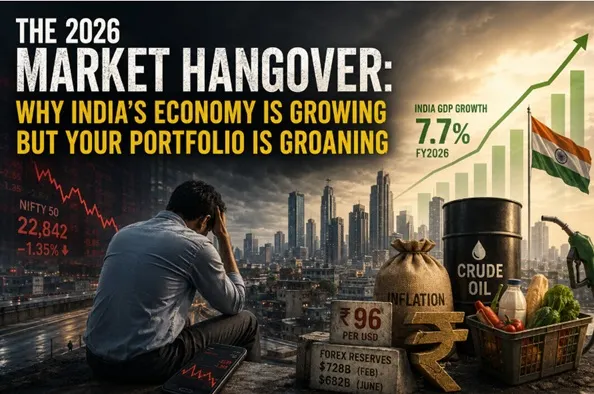
If you have opened your financial apps lately only to close them immediately while muttering a quiet prayer, you are not alone. Welcome to mid-June 2026, a time when reading Indian economic news feels a bit like watching a movie with a completely mismatched soundtrack.
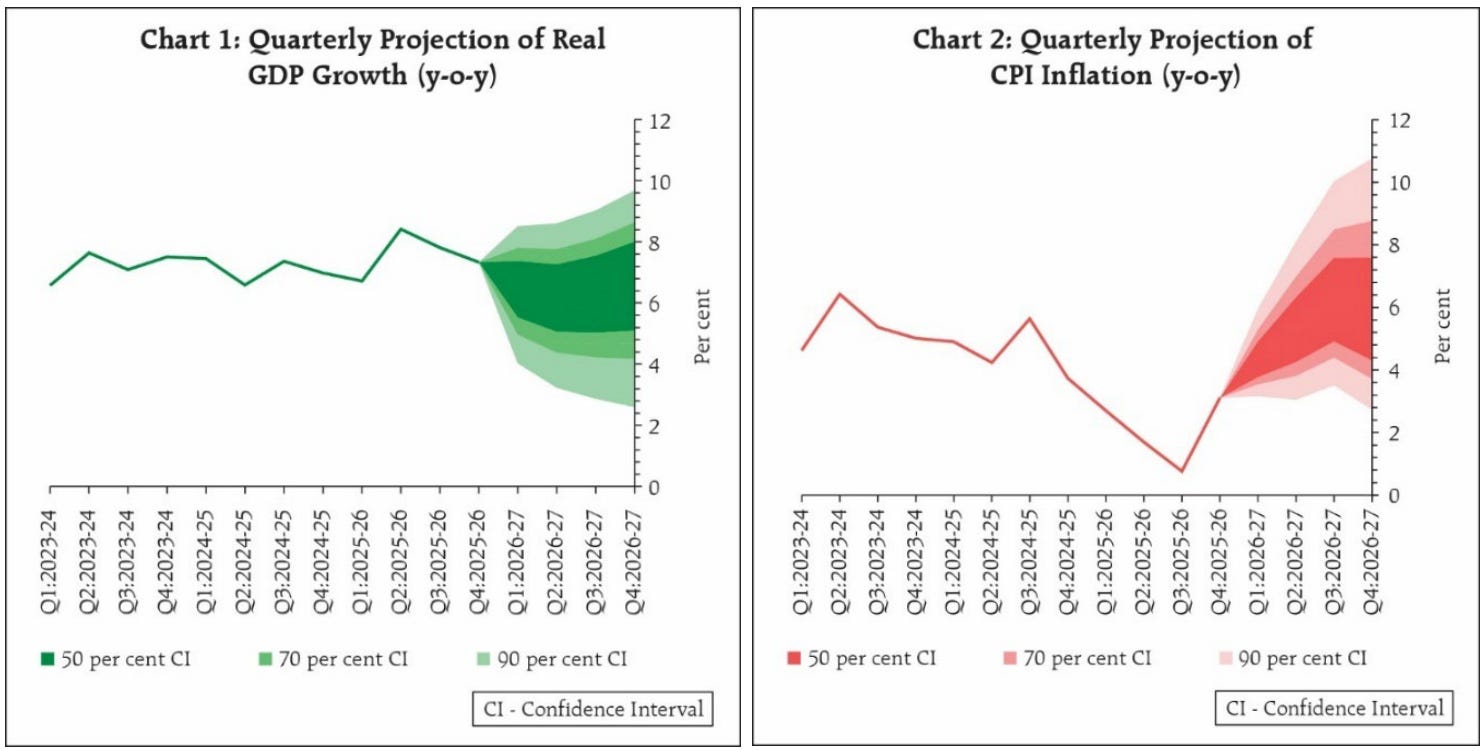
On one track, the government and official data are playing a triumphant brass solo: India’s GDP grew at a roaring 7.7% for FY2026! We are the envy of the developed world!
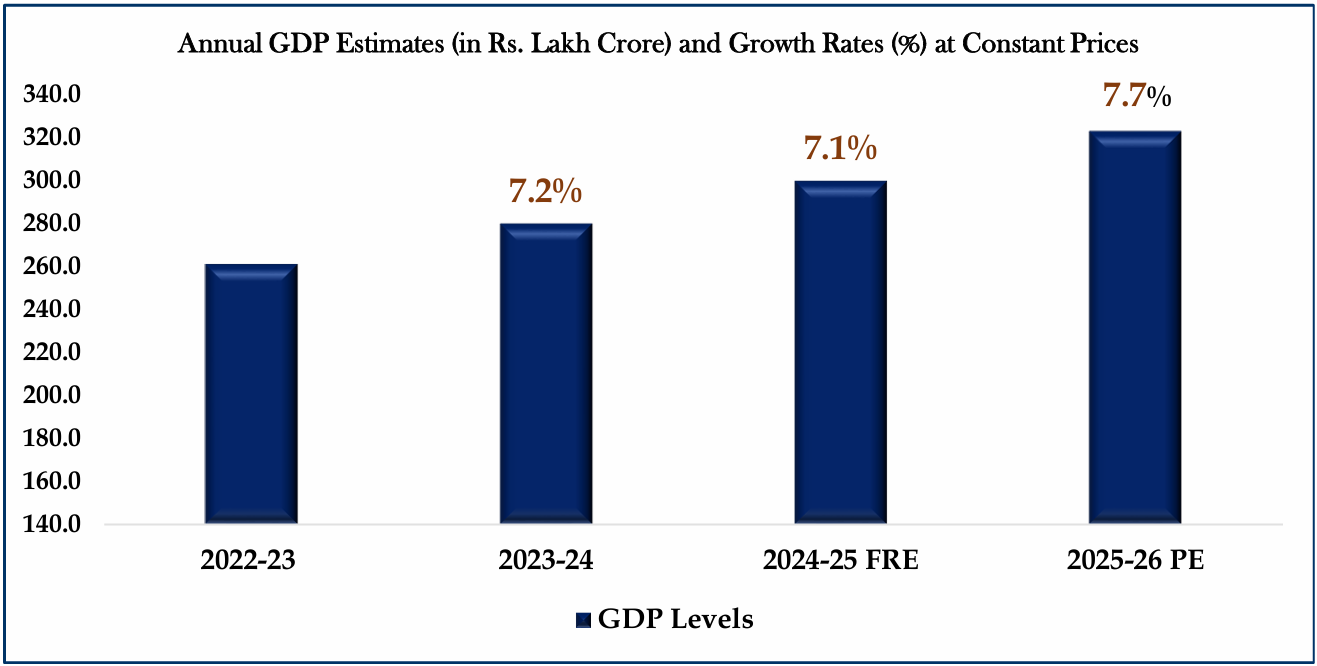
On the other track, your actual stock portfolio is playing a somber cello. The markets are jittery, mutual fund returns have gone sideways, and the Rupee is acting like it’s on a downward slide.
What gives? How can the macroeconomic engine be revving so loudly while retail investors feel like they are stuck in a ditch?
To understand this bizarre disconnect—and more importantly, to figure out how to protect your hard-earned money—we need to look past the shiny headline numbers and figure out what is actually happening under the hood. Spoiler alert: It’s not a terminal breakdown; it’s a classic, text-book market consolidation, heavily spiced with global drama.
1. The Macro Tug-of-War: When the Neighbors Fight and You Pay the Bill
The biggest culprit behind our current financial anxiety isn’t local; it’s imported. The prolonged conflict in West Asia has effectively trapped about 10% of the world’s energy supply. Now, India doesn’t control this geopolitical chaos, but because we import the vast majority of our oil, we are the ones getting the invoice.

Think of it as a massive tug-of-war between strong domestic momentum and a relentless wave of external shocks. The real-time, high-frequency metrics show exactly where the rope is fraying:
- The Rupee’s Mid-Life Crisis: The Indian Rupee recently touched an all-time low of ₹96 to the US Dollar. It has officially earned a spot among the worst-performing currencies in emerging markets this quarter.
- The Forex Piggy Bank: The Reserve Bank of India (RBI) hasn’t been sitting idle. It has been aggressively defending the Rupee by burning through its cash reserves. Total forex reserves have slid from a comfortable $728 billion in February down to $682 billion this month.
- The Double-Whammy Inflation: Wholesale inflation (WPI) is screaming at a 3.5-year high of 8.3%, mostly because raw materials are pricier to ship. Meanwhile, food inflation is sitting at 7.1%, meaning your weekly grocery run is actively competing with your investment budget.
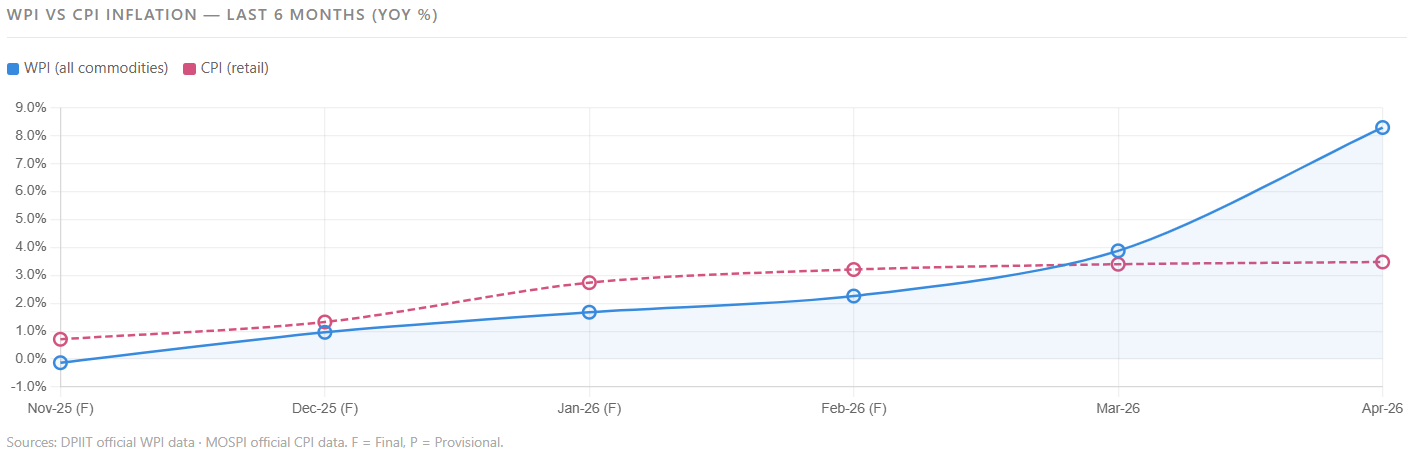
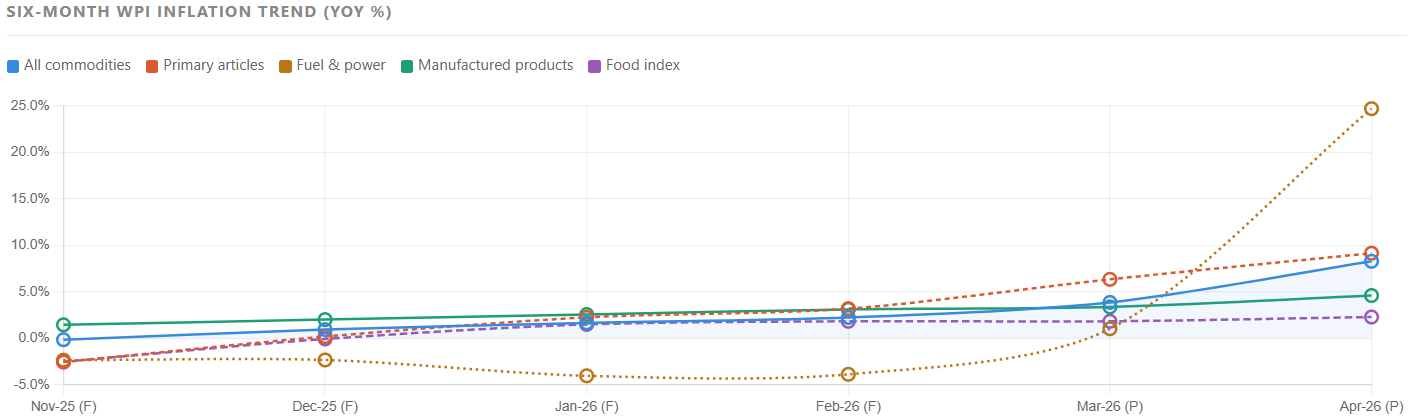
Because of this imported chaos, the RBI recently shaved its FY2027 growth forecast down to 6.6% and bumped its inflation expectations up to 5.1%. It’s the economic equivalent of your boss telling you that your workload is going up, but your bonus is getting delayed.
2. The Great Oil Dilemma: Who Picks Up the Tab?
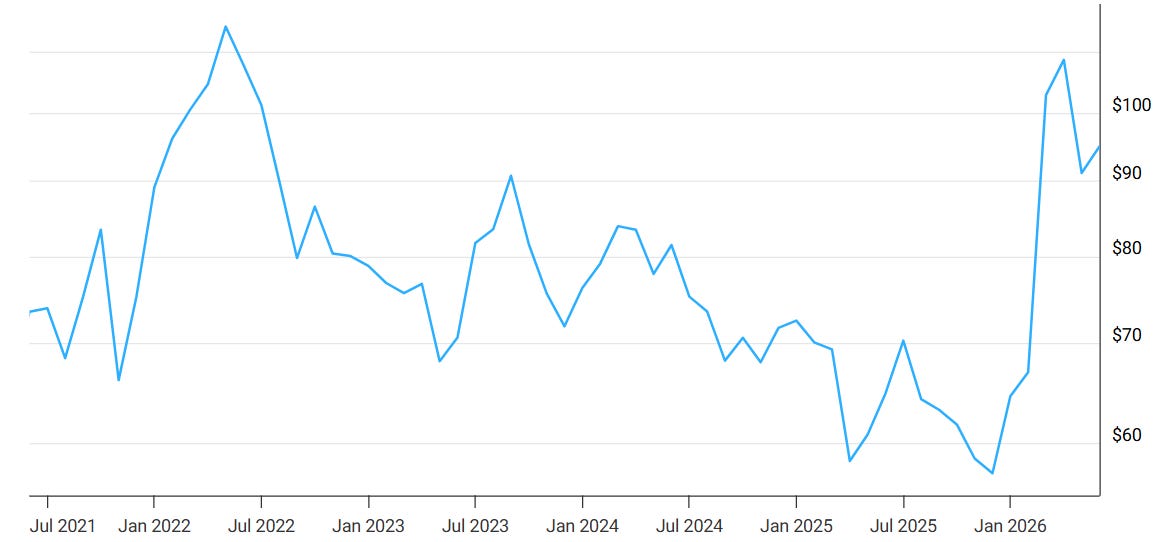
When crude oil hovers around $100 per barrel—well past India’s historical comfort zone of $60 to $65—it triggers a high-stakes game of financial musical chairs. Someone has to absorb that extra cost.
Right now, the central government is playing the role of the overly polite friend at a restaurant who insists on putting the entire expensive dinner on their credit card to keep everyone else happy.
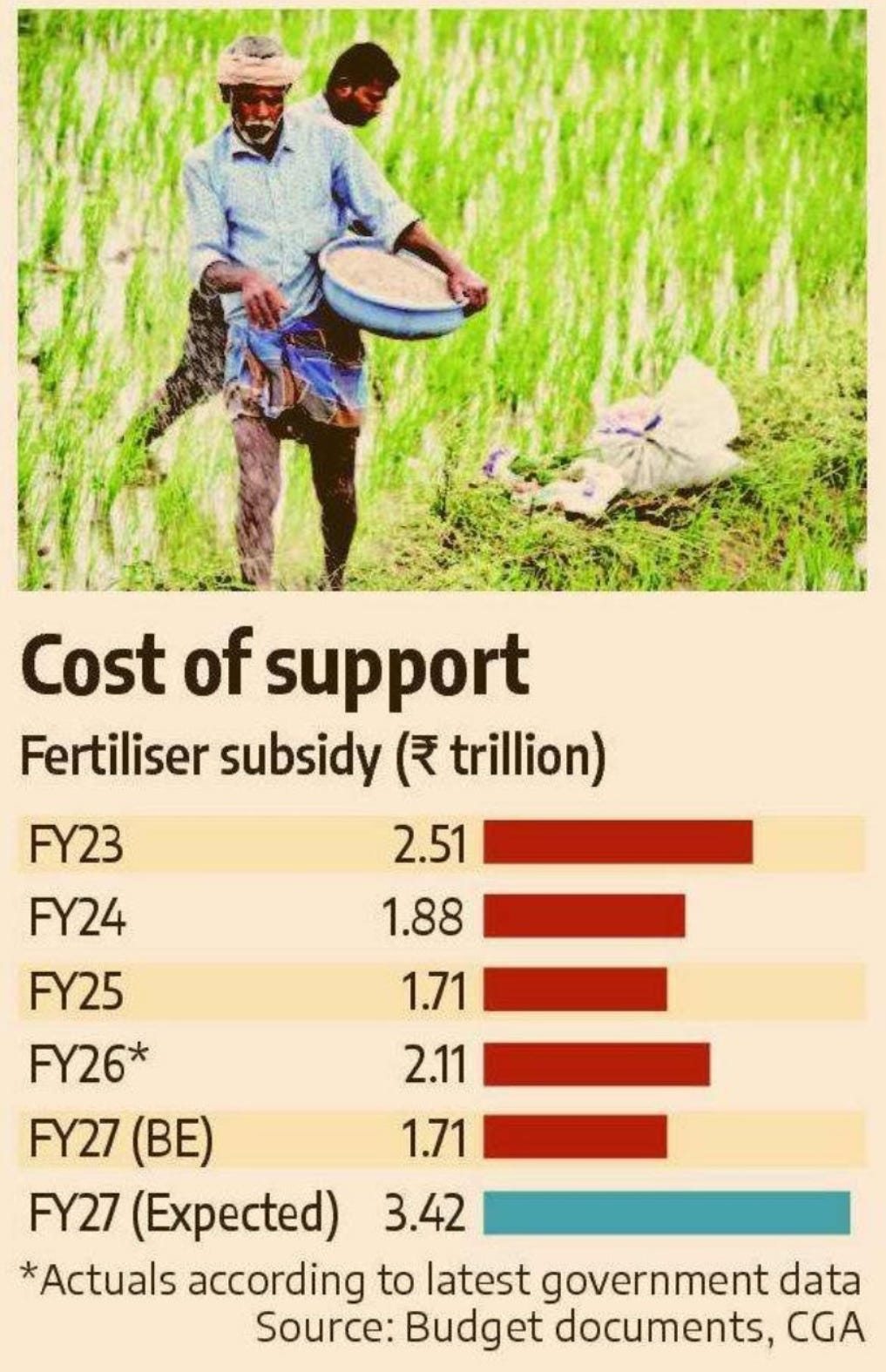
By keeping retail fuel prices artificially cushioned, the state is preventing an absolute panic at the petrol pumps. But this generosity isn’t free. Look no further than the national fertilizer subsidy, which has bloated from a budgeted ₹1.71 lakh crore to a staggering ₹2.5 lakh crore.
As any sensible economist will tell you, shielding the public this way is a temporary band-aid. It kicks the debt down the road to future generations and leaves less government cash available to build schools, hospitals, and rural roads.
Worse, broad fuel subsidies are fundamentally inefficient: the wealthy guy driving a luxury SUV benefits a lot more from cheap fuel than a delivery agent on a 100cc scooter. If oil prices breach $100 later this summer, the government will have no choice but to let retail prices rise, which means consumers will finally feel the heat.
3. The Corporate CapEx Mystery: The Canary in the Coal Mine
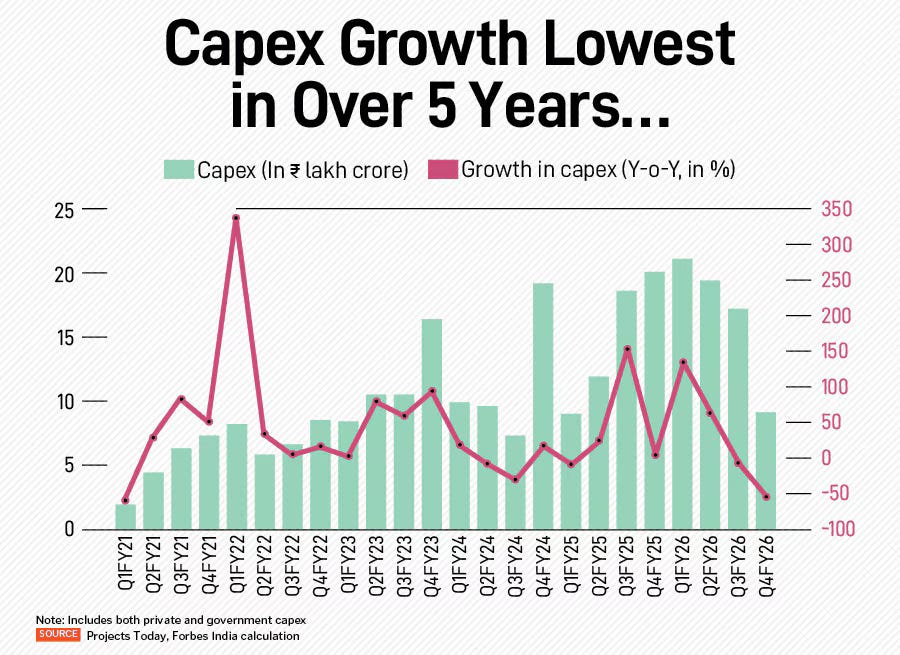
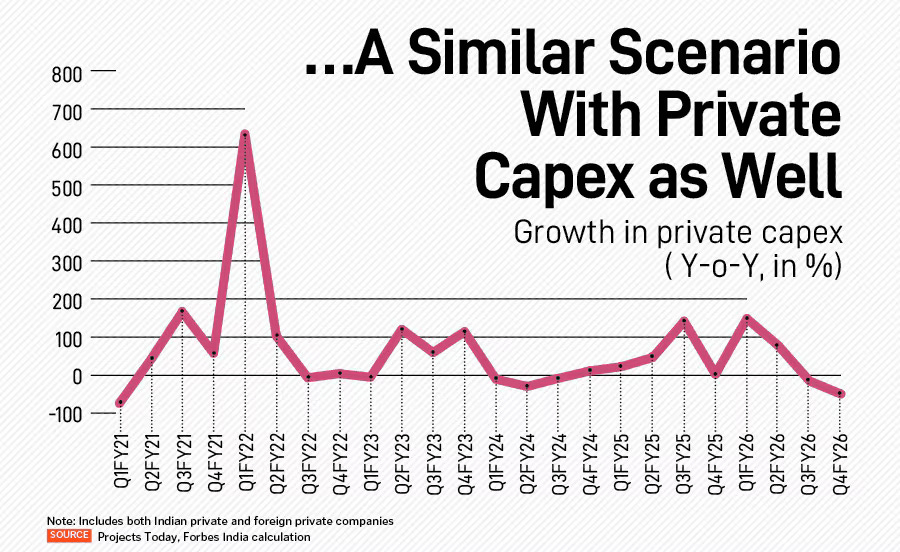
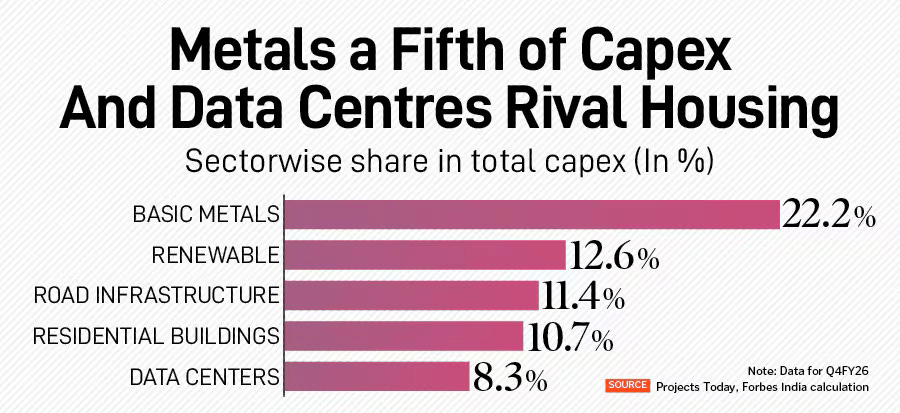
This background noise helps explain a mystery that has baffled analysts for a while: If GDP growth is so amazing, why are India’s top corporate bosses hesitating to build new factories?
In a normal economy, booming GDP means factories run at 100% capacity, prompting corporations to aggressively invest in new equipment. Instead, private capital expenditure (CapEx) remains incredibly timid, and net Foreign Direct Investment (FDI) has steadily declined over the past two years.
The reality is that corporate India is acting like a seasoned sailor watching a deceptive patch of blue sky. They are looking past the backward-looking GDP data and spotting a few structural bottlenecks:
- The Moving Regulatory Goalposts: Unpredictable tax disputes and sudden compliance shifts make foreign investors hesitant to deploy long-term money.
- The FPI Currency Loop: Foreign Portfolio Investors are executing a classic mathematical retreat. If a global fund brings $1 into India when the exchange rate is ₹92, but realizes that a weakening currency means they’ll exit at ₹96/USD, the currency loss can easily wipe out any gains they made on the stock market. So, they sell their shares and sit on the sidelines.
4. Anatomy of a Market Meltdown: Which Phase Are You In?
For everyday retail investors, this macro tug-of-war has felt like a slow, painful grind. But markets move in cycles. Historically, a full equity cycle lasts about 8 to 9 years—usually consisting of five or six spectacular years followed by two or three years of flat lines or corrections.
Right now, we are grinding through the final stages of a classic multi-year correction. Let’s break down the phases so you can orient yourself on this financial map:
Phase 1: Smashing the Euphoria
Late 2024
Remember mid-2024? You could throw a dart at a board, hit a random PSU, Defense, or Power stock, and watch it rise 50% in a month. It was pure euphoria. But when the general elections delivered a tighter, weaker political mandate than expected, reality set in. The hyper-inflated momentum themes were the first to get completely flattened.
Phase 2: The Universal Purge
2025
This was the phase where the pain went systemic. Large-caps, mid-caps, and small-caps all bled together. Mutual fund NAVs went flat, leaving investors staring at zero returns for months. Portfolio managers spent this phase panic-selling speculative stocks and moving capital into safer, defensive sectors with real corporate earnings.
Phase 3: The Outside Shock (Capitulation)
Mid-2026 (Current)
This is where we are today. The domestic economy is actually fine, but the global environment is throwing a tantrum. Tariffs are shifting, global markets are nervous, and oil is expensive. Phase 3 corrections are always fast, indiscriminate, and emotionally exhausting. It’s designed to scare out “weak hands”—but historically, it represents the absolute tail-end of a corrective cycle before a fresh growth run begins.
5. Finding Value: AI Illusions vs. Real Asphalt
So, how do you navigate this mess without losing your mind? By separating fleeting tech hype from unglamorous, rock-solid value.
The Global AI Reality Check
A lot of the international money fleeing technology stocks right now is driven by a very simple realization: Artificial Intelligence has hit a monetization wall.
For two years, Wall Street valued tech companies as if AI would instantly solve world hunger and double corporate margins overnight. In 2026, the invoices for those massive data centers and high-end microchips are finally due. For AI to be a viable commercial product, running an AI software workflow has to be cheaper than hiring human labor. Until tech companies show real corporate sales instead of just cool chatbot demos, valuations in this space will keep sliding.
The Quiet Renaissance of Indian Infrastructure
While global tech investors chase software illusions, a massive, structural turnaround has been quietly playing out in India’s most unglamorous sector: Infrastructure.
To understand why this is exciting, we have to look back at the infamous infrastructure crash of 2010. Back then, Indian infra companies had massive, record-breaking order books, but their balance sheets were completely toxic, drowned in high-interest debt. It was a fast track to bankruptcy court.
Fast forward to 2026, and the situation has completely inverted:
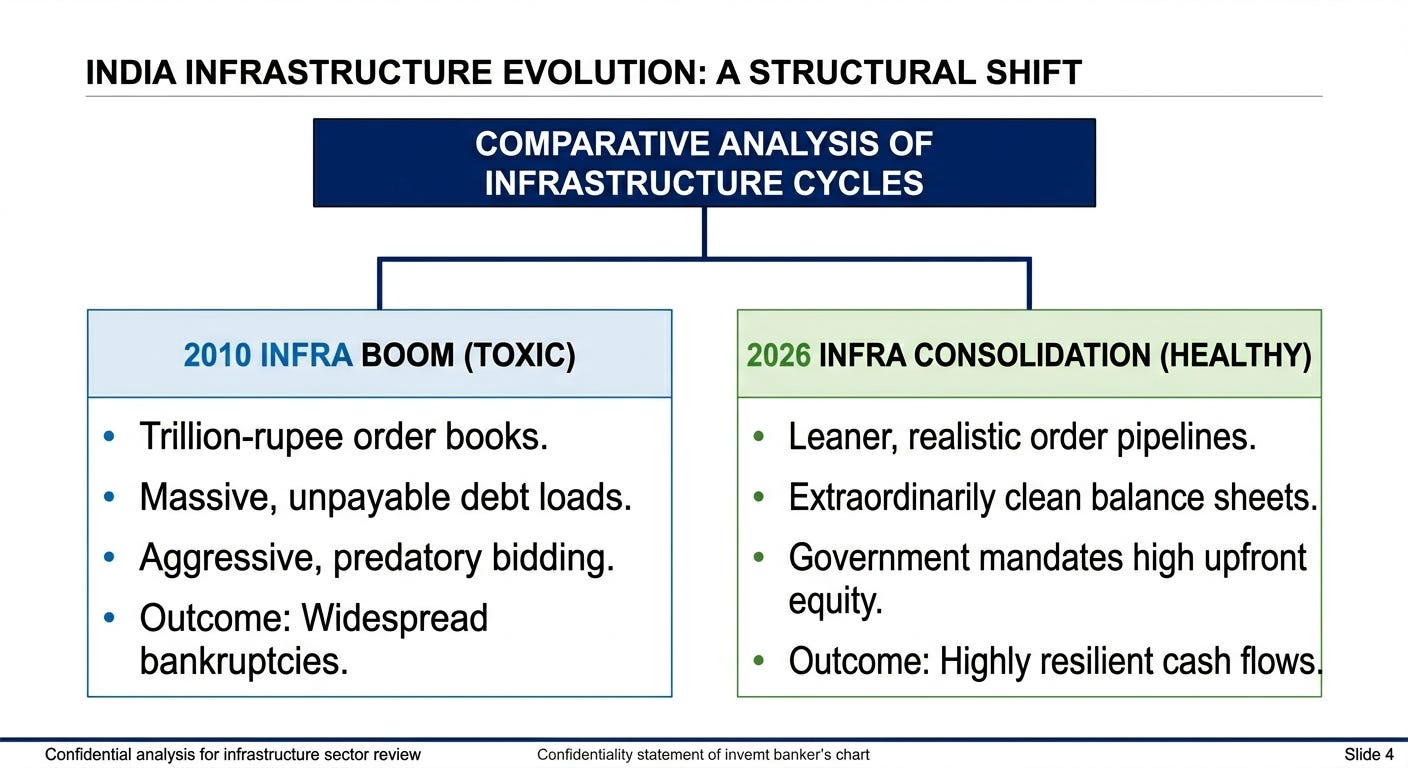
Furthermore, new government rules require private construction companies to put up way more of their own cash upfront to win bids. This completely weeds out the sketchy, undercapitalized players. The mid-and-large cap engineering firms left standing have remarkably pristine balance sheets. They might have lighter order books today, but they are financially rock-solid. When government spending inevitably re-accelerates, these companies will experience highly profitable, cash-flow-rich growth.
6. The Retail Investor’s Playbook for the Rest of 2026
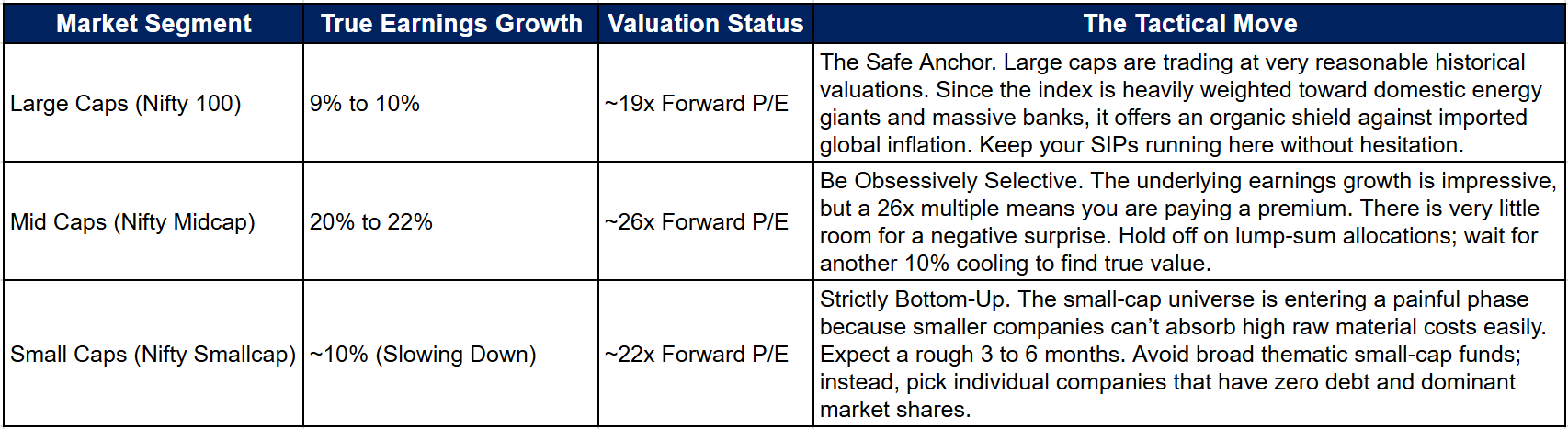
When the market enters an indiscriminate selling phase, it stops looking at a company’s actual value. For a disciplined investor, that panic is a gift. Here is how you should look at the equity landscape across different tiers today:
Allocation Strategy Matrix

The Value Shopping List
If you are looking to deploy capital while the broader market consolidates, look for sectors trading significantly below their 10-year historical valuation averages:
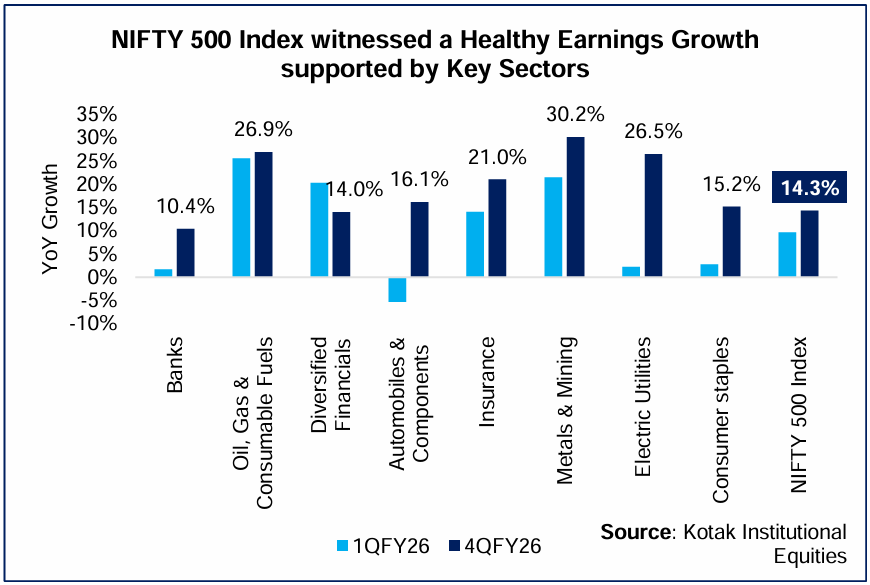
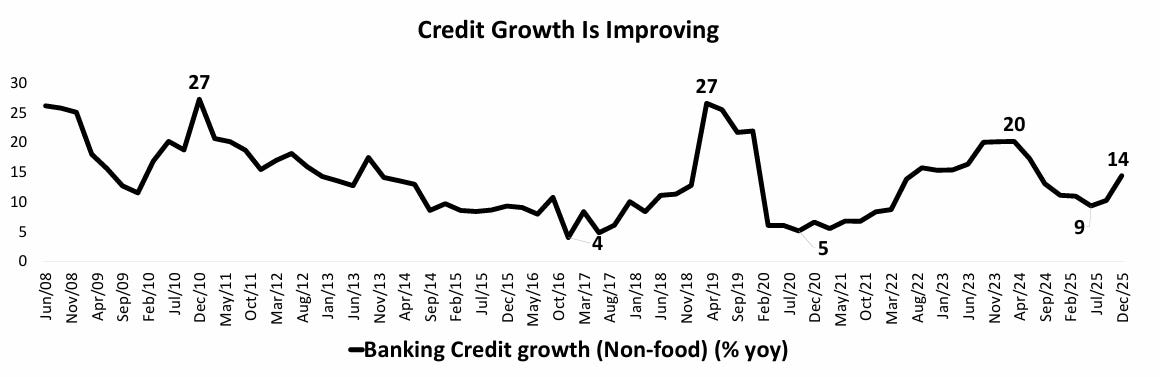
- Banking and Financials: Indian banks have the cleanest balance sheets they’ve seen in a decade. Non-performing assets (NPAs) are at historic lows, and credit demand from retail borrowers remains incredibly strong.
- Defensive FMCG: When times are uncertain, people might delay buying a new car or a house, but they don’t stop buying soap, tea, or cooking oil. Consumer staples offer a fantastic shelter against sticky inflation prints.
- Power / Energy: This is a structurally booming space. With more AI adoption, more energy requirements are needed. It can come from various sources like renewable or non-renewable, but I am more bullish on renewable space.
The Big Picture
The current market stress is not a warning sign to pack your bags and run away from Indian equities. Rather, it is a necessary, long-overdue palate cleanser. The external shocks from West Asia and the painful currency adjustments are simply doing the hard work of draining the speculative froth out of the system.
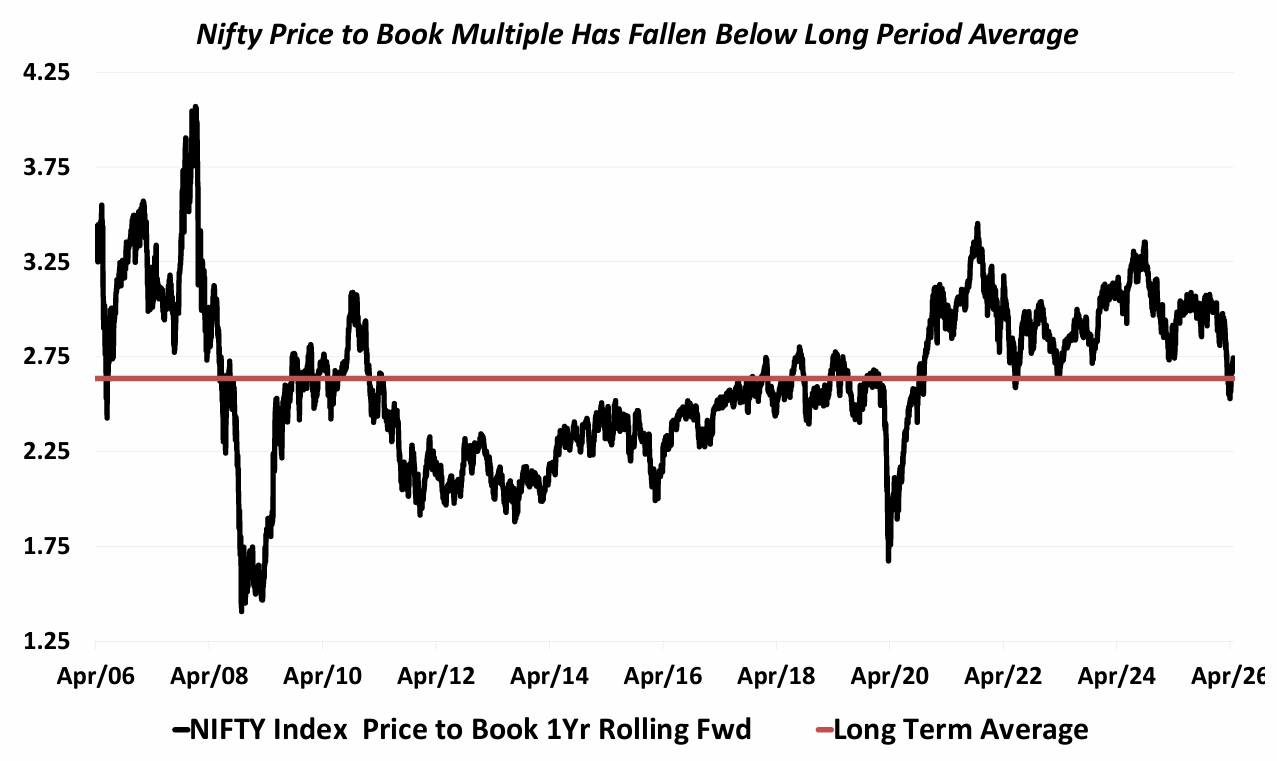
It is testing the resilience of corporate balance sheets, sorting the fundamentally strong businesses from the speculative hype, and punishing investors who chased easy momentum over hard data.
For the retail investor, the strategy right now shouldn’t be about timing the absolute bottom of the market or panicking over daily red screens. It’s about recognizing that the structural story of India remains intact. Clean up your portfolio, lean into defensive large-caps and deleveraged hard assets like infrastructure, and let the market hangover clear up. The party will return—and this time, it will be built on far healthier foundations.
Disclaimer: I am not a registered SEBI Research Analyst and anything in the above article should not be construed as a recommendation. This should be read solely for education purposes.