

But How is it Monetizing the Melody?
Music is woven deep into the fabric of Indian life. Its diversity spans language, region, and culture, yet its magic and emotional connection remain universal. The industry behind this heartbeat, however, is anything but simple. It’s a dynamic, tangled web of old-school record labels, film studios, streaming platforms, billion-plus listeners, live events, copyright battles, and cultural reinvention.
Here’s a deep dive into the evolution, economics, and present challenges of India’s music industry in 2025.

How We Experience Music
The Lean Forward vs. Lean Back Paradigm
At its core, music consumption in India splits into two primary forms:
- Lean Forward: When you actively seek out music – playing favorites on streaming platforms, inserting a CD, or curating a playlist.
- Lean Back: When you encounter music passively – during movies, ads, weddings, restaurants, shops, or sporting events.
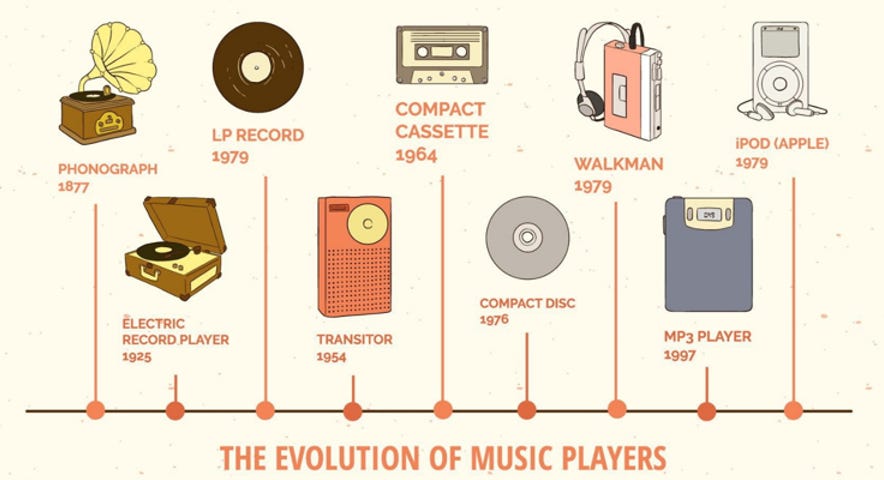
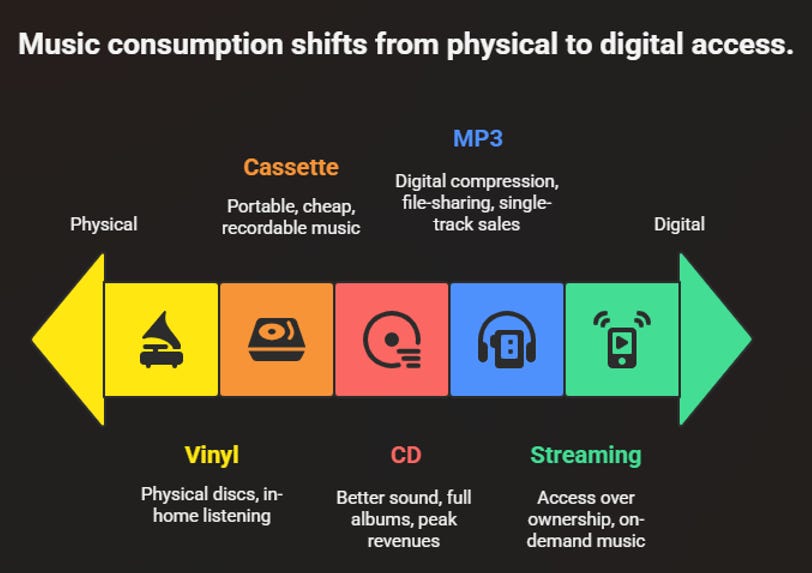
The shift from vinyl and cassettes to digital has not only broadened reach but fundamentally altered how artists, labels, and listeners interact. Today, a listener in a remote town can stream the same new release as an A&R (Artists and repertoire) executive in Mumbai.
Industry Structure
By the end of 2024, the Indian music industry reached a value of about ₹53 billion, projected to hit ₹78 billion by 2026. This might seem large, but music, even today, is only around 6% of India’s Media & Entertainment sector.
In contrast, Bollywood (the film industry) sits at a formidable ₹172 billion. Yet, India remains #15 in global music rankings, with the recorded music sector worth only ₹32 billion – a modest slice, considering the sheer scale of the country’s audience.
Unique Duality: Film vs. Non-Film Music
- Film Music: Unique to India, film songs are engineered alongside movies—mostly Bollywood, but also Tollywood (Telugu), Kollywood (Tamil), and other regional film hubs. Bollywood music represents up to 80% of the industry’s revenues, a dominance rarely seen elsewhere.
- Non-Film Music: Covers indie pop, devotional, regional, classical, band music, ghazal, folk, and all releases outside film projects. This segment is in resurgence thanks to digital platforms and artist-first promotion.
Playlists and streaming have made room for non-film artists to build audiences outside film circuits, but the star power and commercial heft of film music still rule the mainstream.
Legacy, Digital, and Copyright Battles
The history of recorded music in India dates to the early 20th century when gramophone companies arrived and the first studio song was recorded by Saregama in 1902. Through the 1930s, “talkies” transformed film music into the popular soundtrack of the nation. For decades, playback singers and composers worked primarily as “work for hire”. Ownership lay with studios or labels, rather than the performers themselves.

Why Monetization Is Hard
Despite massive listenership, India sees very low paid subscription uptake for music. YouTube, with 550 million monthly active users, dwarfs dedicated audio streaming platforms, making ad-supported models the norm. Even as digital revenue is growing 14%+ a year, per capita returns for both artists and labels remain among the world’s lowest.
The battle for copyright and royalty transparency remains intense:
- Bollywood deals mean production houses, not singers or composers, own the music.
- Safe harbor rules and evolving copyright law lag the rapid pace of streaming and AI-generated music.
- Most artists must lean on live performances, branding, and social media for meaningful income.
But there’s optimism: Industry leaders predict 30–50% annual market growth if paid subscriptions, copyright reforms, and AI’s impact get addressed soon.
Music Tourism: India’s New Beat
Worldwide, music tourism, i.e. traveling for festivals, concerts, or opera, is booming, and India is hitting its own high notes:
- 2024 saw an 18% surge in live entertainment consumption – 31,000 live events across 319 cities.
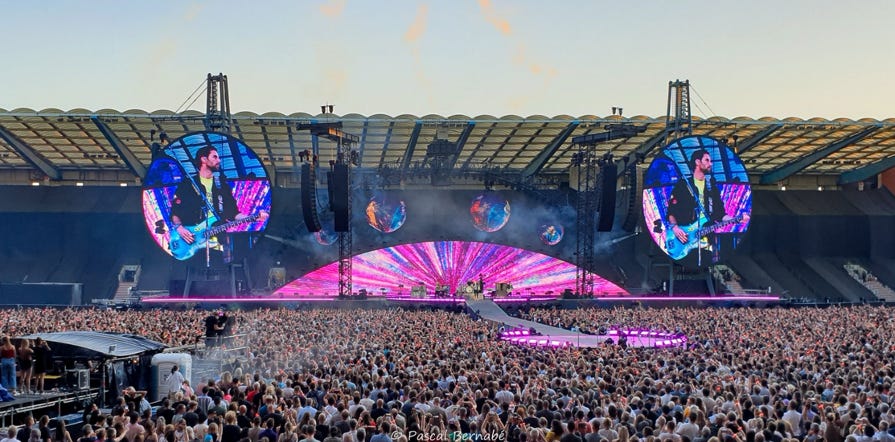
- Megashows like Coldplay’s Ahmedabad concert generated ₹6.4 billion in economic impact, including ₹3.9 billion to local businesses and ₹720 million for GST collections.
- Hybrid events (live + digital streams) are redefining access and reach; the Coldplay concert was also live-streamed on Jio Hotstar.
India’s live music market is expected to grow to nearly ₹500 billion by 2034, at a blazing CAGR of 17.6%, confirming both local and global appetite.
Streaming: Revolution or Race to the Bottom?
Music streaming in India, led by domestic apps like Gaana and JioSaavn alongside global players Apple Music and Spotify, hit $1.5B revenue in 2024, heading toward $5.1B by 2033. Smartphone penetration, cheap data, and love for regional content drive this growth, but most users still prefer free, ad-supported access.
The key monetization levers are:
- Conversion to paid – India’s spend on subscriptions is a rounding error compared to global averages.
- AI-based personalization – is helping increase time spent and engagement, but challenges remain in copyright and fair pay.
- Telecom deals – such as Airtel offering Apple Music to 281 million customers for free in 2024, spurring premium access at scale.
YouTube: The Unrivaled Giant in India’s Music Scene
YouTube dominates India’s music consumption landscape, with over 550 million monthly active users tuning in for an immense variety of content, from film songs and indie tracks to devotional music and karaoke versions. Unlike subscription-based streaming platforms, YouTube operates mostly on an ad-supported model, making it the most accessible and widely used music platform in India, especially given the country’s large base of free users.
This dominance presents both opportunities and challenges. While it provides unparalleled reach for artists and labels, monetization tends to be lower compared to paid streams, pushing many creators to diversify income through live performances, brand endorsements, and digital rights management. Nevertheless, YouTube remains the primary gateway for music discovery in India, catalyzing virality and helping nurture indie talent alongside established stars.

The Titans: Biggest Companies
T-Series Ltd.
- It has ~35% of the Indian music market, making it the largest label in India
- Their YouTube channel boasts 301 million subscribers and 306 billion views as of July 2025
- While not publicly listed, T-Series’ overwhelming market dominance makes all other players look small by comparison
- It was founded by Gulshan Kumar in 1983
Sony Music India (subsidiary of Sony Group)
- It has a market share of Approximately 25%, second only to T-Series
- They are a dominant foreign-backed label and have a strong Bollywood and regional portfolio
Saregama India Ltd.
- India’s oldest record label, part of RP Sanjiv Goenka Group, with roots going back to 1902
- Holds India’s largest catalog: 110,000+ songs across 14 languages
- Owns music publishing, TV content, and launched Saregama Carvaana highly successful digital music player marketed to fans of retro Hindi music.
- Expanded into film production (Yoodlee Films) and multiplatform retailing.
- Saregama is a publicly listed company with a market cap of ~₹9,200 crores (as of 14th Aug 2025) and has given a 5-year CAGR of 61%
Tips Music Industries Limited
- Founded by the Taurani brothers, entered the tape business in 1988, went public in 1999, and quickly became a top music and film producer
- Has produced iconic Bollywood soundtracks and independent hits, venturing into South Indian and international music markets
- Also in film production, distributing popular blockbusters
- Market cap of TIPS Music is ~₹7,500 crores and has given 105% CAGR in last 5 years
Challenges and Opportunities
Barriers
- Copyright Confusion: Most rights vest with studios/labels; composers and performers rarely own the tracks
- Low Royalty Rates: Revenue per stream or download is tiny by global standards
- Piracy: Still an issue, especially with WhatsApp and Telegram sharing
- Live Performance Hurdles: Masked by lack of clear policy, outdated infrastructure, and patchy compliance
Engines of Growth
- Regional and Indie music boom: Languages beyond Hindi, like Tamil, Punjabi, Telugu, now drive major digital volume
- Technology: AI-driven discovery, smarter playlists, direct artist engagement
- Music Publishing: Growing revenue streams from sync deals, TV, ads, and games
- International Collaborations: From K-pop to Western superstars, Indian artists regularly collaborate with global peers, expanding the audience far beyond borders
Where Does India Go from Here?
Can India monetize its melody? The answer depends on bridging legacy with technology, copyright reforms, and a cultural acceptance for paying for music. While film music still rules the charts, non-film scenes are flourishing, live events are back, and streaming is democratizing access.
The next phase will call for policy support, investment in concert infrastructure, and a fairer system for artist compensation. India now faces a moment where its unique musical diversity, digital prowess, and entrepreneurial energy can create a world-leading music market, if the commercial model evolves fast enough.
What to Watch in this sector?
- Will paid subscription grow and royalty rates improve?
- How quickly will copyright reform catch up with streaming, AI, and global trends?
- Can indie and regional artists build sustainable careers beyond Bollywood?
- Will music tourism become a multibillion-dollar engine?
Disclaimer: I am not a registered SEBI Research Analyst and anything in the above article should not be construed as a recommendation. This should be read solely for education purposes.
Disclosure: Have a minor allocation to TIPS music in my satellite portfolio as on the date of writing this.
References:
- “India’s digital music revenue slips in 2024 despite paid streaming subscriptions,” EY India and FICCI, RouteNote Blog, April 2025
- “The Rise of Music Publishing in India,” EY Insights, December 2023
- “India Music Streaming Market Size & Outlook, 2024-2030,” Grand View Research, December 2022
- “Music royalty kitty crosses Rs 700 crore in 2024 on boost from streaming,” Economic Times, May 2025
- “A ₹640 crore windfall: How Coldplay’s concerts delivered major economic boost to Ahmedabad,” Hindustan Times, April 2025
- “Organised live events sector in India grows 15 pc in 2024, adds Rs 13 billion in revenue: Report,” Economic Times Travel, May 2025
- “India’s music market eyes major growth in 2025 – despite challenges,” Music Ally, May 2025
- “How Ahmedabad’s Coldplay tour bounty signals India’s prospering concert economy,” India Today Insight, May 2025
- “From a Dream to a Legacy,” Tips Official Website
- “Copyright Issues in the Indian Music Industry: Challenges and Remedies,” YLCube, February 2025
- “30% surge in footfalls, 40% repeat fans, why India’s concert economy is exploding,” Storyboard18, July 2025