
A Recent Fed research notes, if implemented, might make it a reality
What if, one morning, gold prices suddenly jumped, the dollar’s value shifted, and central banks worldwide moved to adjust their reserves?
Such a scenario is not purely hypothetical. For the first time in decades, the idea of the United States revaluing its gold holdings is appearing in official Federal Reserve research. This would mark one of the most significant changes to America’s monetary framework since the 1970s, with consequences reaching far beyond US borders.
The Bretton Woods Legacy and the $42.22 Price
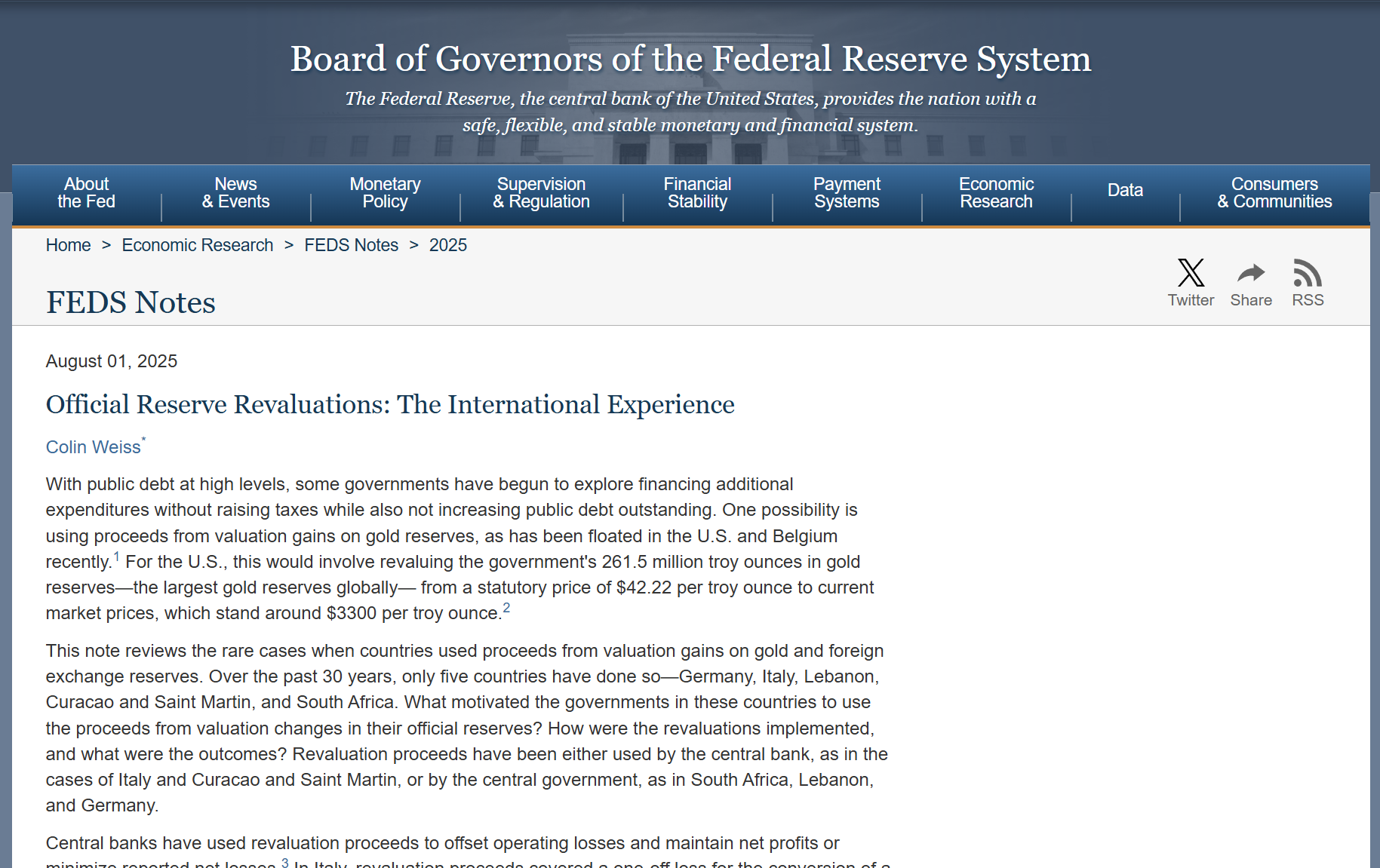
The current statutory gold price of $42.22 per ounce dates back to the final chapter of the Bretton Woods system. After President Nixon suspended the dollar’s convertibility into gold in 1971, the official price was raised from $35 to $38 per ounce, then to $42.22 in February 1973. Later that year, the dollar was allowed to float freely, ending the gold standard. The $42.22 figure, essentially a historical artifact, has remained on US government books for more than 50 years.
Why Consider a Revaluation Now?
The United States holds 261.5 million troy ounces of gold, officially valued at about $11 billion. At today’s market price of around $3,300 per ounce, that same gold is worth roughly $863 billion – a difference of over $850 billion.
Revaluing gold would not require selling it; instead, it would involve adjusting the statutory price to reflect current market realities or a policy-driven target. This would instantly strengthen the government’s balance sheet and, in theory, provide fiscal breathing room without immediate tax hikes or spending cuts.
Probability of Implementation
The likelihood is no longer negligible:
- The Federal Reserve’s decision to publish a detailed note on gold revaluation suggests genuine institutional interest.
- Legislative proposals, such as Senator Lummis’s BITCOIN Act, explicitly link revaluation proceeds to new strategic reserves.
- Political alignment exists, as senior policymakers have expressed both interest in gold’s role and openness toward digital assets.
- With US debt surpassing $37 trillion and interest costs surging, unconventional fiscal tools are gaining appeal (although this revaluation will not be able to even dent the humungous debt bill).
Global Gold Market Impact
A US revaluation would reset global gold prices overnight. Even a moderate doubling would force other central banks to follow suit to avoid balance sheet erosion. Nations like Germany, China, Russia and even India could see reserves jump in value by hundreds of billions of dollars. This could accelerate moves away from the US dollar in trade settlement and strengthen calls for a commodity-influenced monetary system.
Economic and Inflationary Effects
A revaluation effectively injects liquidity into the system. The increase in the government’s balance sheet mirrors the impact of large-scale monetary easing, which could lead to:
- Short-term inflationary pressure
- Increased public and market expectations for commodity-backed stability
- Improved bank capital positions (as gold counts as Tier 1 capital under Basel III rules)
Historically, revaluations, such as that in 1934, have been followed by notable consumer price increases. The scale would depend on the new price chosen and the extent to which the revaluation is paired with broader policy changes.
Link to Cryptocurrency Strategy
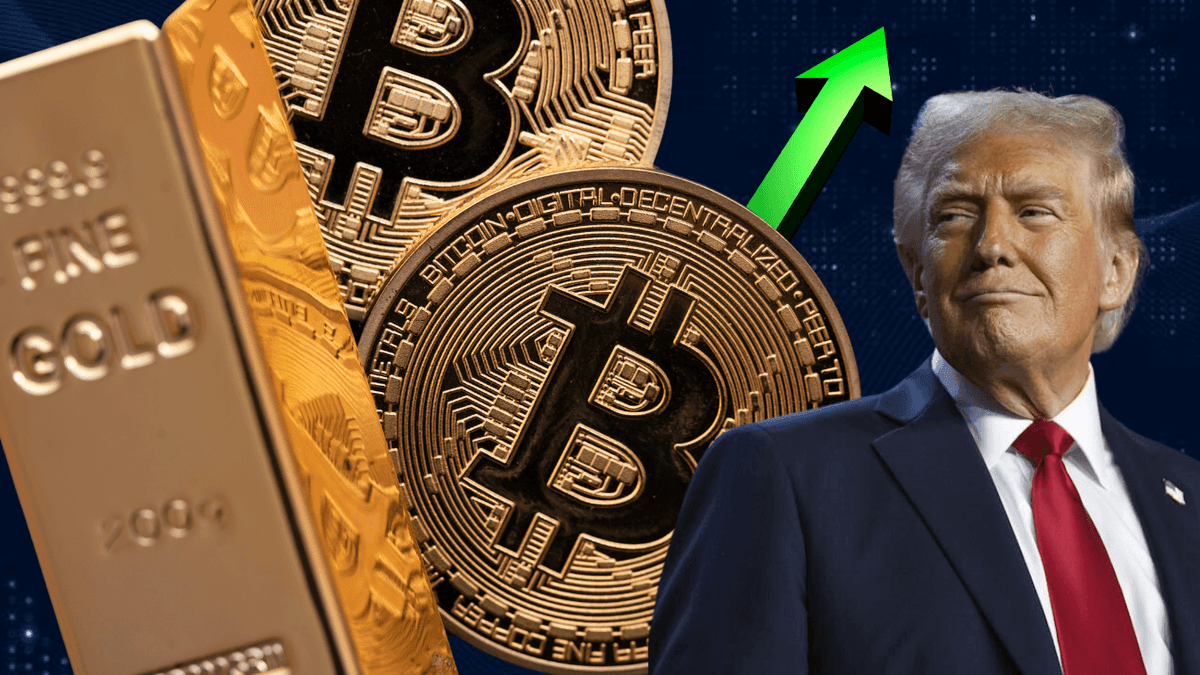
An intriguing development is the potential alignment with US digital asset policy. With growing presidential support for cryptocurrency adoption, gold revaluation could create funds to rapidly build a Strategic Bitcoin Reserve or other crypto holdings without direct taxation. This would position the US to lead in both traditional and digital hard assets, balancing gold’s stability with cryptocurrency’s technological adaptability.
Implications for India
India would see both benefits and challenges:
- Benefits: India’s 854 metric tons of gold would gain about $91 billion in value, strengthening the Reserve Bank of India’s financial position and improving creditworthiness.
- Challenges: As the world’s second-largest consumer of gold, higher prices would increase import costs, impact household budgets, and potentially widen the current account deficit if imports continue unchecked.
For developing nations more generally, outcomes would depend on whether they are net gold producers or importers. Gold-rich economies could see export booms, while heavy importers might experience inflationary stress.
How It Could Be Executed
The Treasury could act relatively quickly: revalue the statutory gold price, adjust gold certificates with the Federal Reserve, and realize gains on paper instantly. No physical gold would need to change hands. Such a move could be timed for maximum effect, either in response to a crisis or as part of a pre-election economic narrative.
In Conclusion…
US gold revaluation would not fix America’s structural fiscal problems, but it could provide short-term relief, reset global perceptions of the dollar, and shift the balance of monetary power. It would also likely energize discussions about a “Bretton Woods III” world, where currencies are once again anchored, at least partially, to tangible assets.
For investors, central banks, and policymakers, the message is clear: gold’s monetary role, long dormant in official policy, may not be as obsolete as the last half-century has suggested.
But Then, Why Should Gold Price Increase?
Here are the key reasons why this drives gold prices up:
- Liquidity: The US government would recognize a huge gain on its gold holdings without selling any physical gold. This boosts the official gold asset value, which can then be used to “create” money indirectly, increasing liquidity in the system akin to monetary expansion. This added liquidity feeds into demand and inflation expectations, pushing gold prices higher.
- Global Central Banks: More than the US, the other countries, holding gold reserves, who would also likely revalue their gold to remain competitive, will also be beneficiaries (causing a cascading global repricing of gold). Nations heavily relying on gold reserves (e.g., India, Germany, China, Russia) would see substantial increases in reserve values. This creates upward pressure on gold prices worldwide to maintain balance sheet integrity and reserve adequacy.
- Alignment with Regulatory Standards: Under Basel III financial regulations, gold must be marked to market to count as Tier 1 capital for banks. A revaluation aligns US gold reserves with these standards, effectively increasing the gold-backed capital base of financial institutions (as collateral), supporting more lending and economic activity, all increasing demand for gold.
This step can be considered like a Quantitative Easing, without the tools used which we all are used to see. It just increases liquidity indirectly,
In essence, the gold price increase is driven by the resetting of official gold reserve value to realistic market prices, resulting in systemic monetary expansion, revaluation by other central banks, improved bank capital limits, and increased investor demand based on gold’s revised monetary role.
So As An Investor, You Should Do What?
Investors should take a balanced and strategic approach. While the possibility of a significant gold price surge and global monetary shifts adds urgency, it is important to remember that such a move is complex and its timing uncertain.
Gold continues to play a crucial role as a portfolio diversifier and a store of value amid economic and geopolitical uncertainty. It tends to protect against inflation, currency devaluation, and systemic financial risks. Maintaining a meaningful allocation to gold, typically around 5-10%, depending on individual risk tolerance (one may go to even 15%, with 5% as being tactical in current scenario), can provide a hedge during turbulent times and help preserve purchasing power.
At the same time, investors should avoid overconcentration, as gold prices can be volatile, influenced by shifting policy dynamics, global demand, and sentiment.
In one of the next posts, I will cover various ways to invest in Gold, with their pros and cons. Hit like if you are keen to read this one in next few weeks.
Disclaimer: I am not a registered SEBI Research Analyst and the above article should not be construed as a recommendation. This should be solely for education purposes.