
In our previous discussions (part 1) and (part 2), we established a core premise: the energy transition is ultimately a war over physical constraints. It is a battle for fuel, materials, and time.
If you scan the macro landscape or financial forums today, the conversation around nuclear energy usually circles the same familiar suspects: uranium spot prices, Canadian miners, and Kazakh geopolitics.
But on April 6, 2026, the global nuclear narrative quietly fractured.
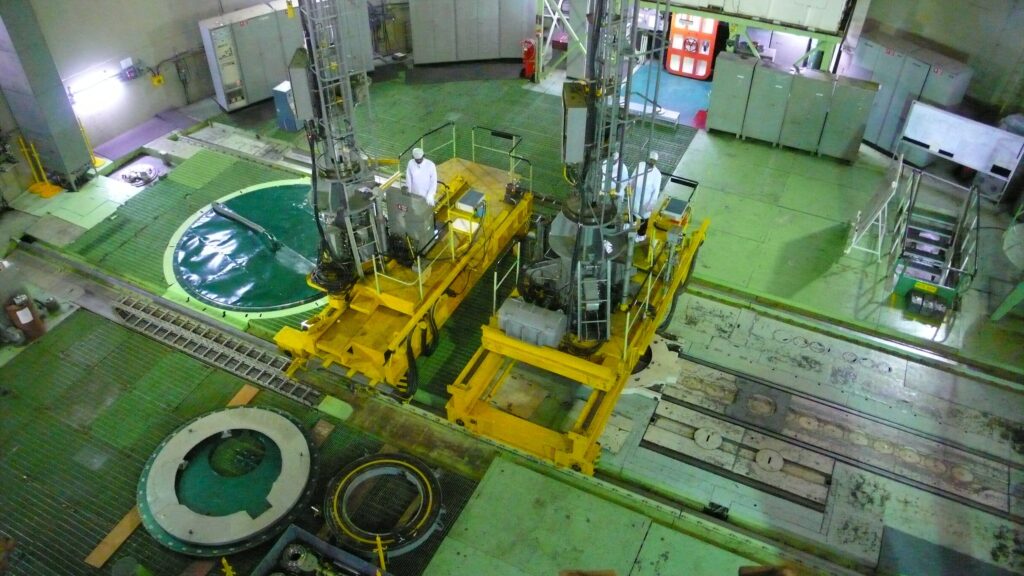
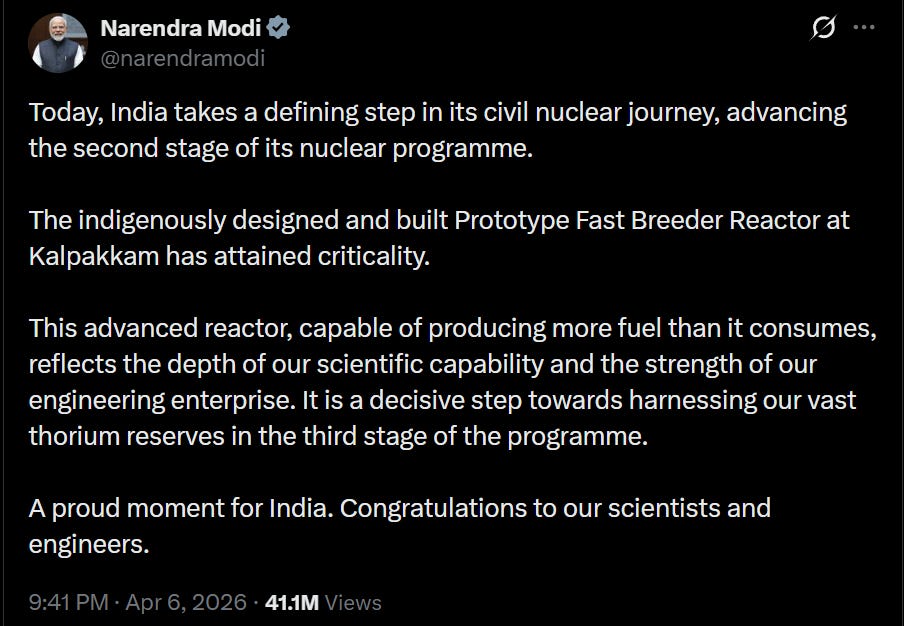
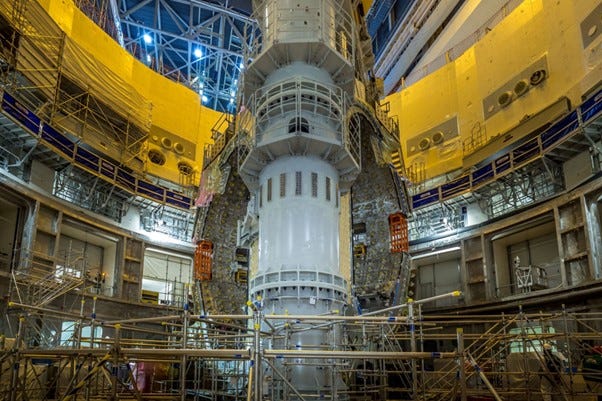
The Prototype Fast Breeder Reactor (PFBR) at Kalpakkam, Tamil Nadu, achieved “criticality.” In nuclear physics, criticality means a reactor has sustained a controlled nuclear chain reaction for the first time. It is alive.
To the untrained eye, this is just another infrastructure milestone.
To capital markets and energy strategists, this is the “Holy Grail” of Indian energy sovereignty.
Here is exactly what this means for the commodity supercycle, and why India just re-wrote the rules of the nuclear endgame.
I. The Context: Breaking the Uranium Constraint
To understand Kalpakkam, you have to understand India’s geologic irony.
As investors, we track resource distribution closely. The math for India has historically been brutal: we are fundamentally “Uranium poor” but overwhelmingly “Thorium rich.” India holds roughly 25% of the world’s thorium reserves, locked in the monazite beach sands of our southern coasts.
But you cannot simply throw Thorium into a standard reactor. It is fertile, not fissile. It needs a spark.
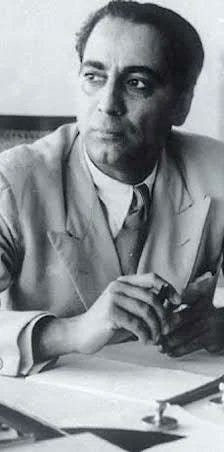
For decades, India has been trapped in Stage 1 of Homi Bhabha’s legendary three-stage nuclear programme. We have relied on natural uranium to power our Pressurised Heavy Water Reactors (PHWRs). Because we lack domestic high-grade uranium, we have had to import it.
This reliance binds India to the “Uranium Cartel” with nations like Kazakhstan, Canada, and Australia. It creates a massive foreign exchange drain and leaves our baseload power vulnerable to the geopolitical whims of the West and the East.
We had the engine, but we were renting the fuel.
II. The Breeder: A Machine That Defies Economic Gravity
This brings us to Stage 2 and the Kalpakkam PFBR.
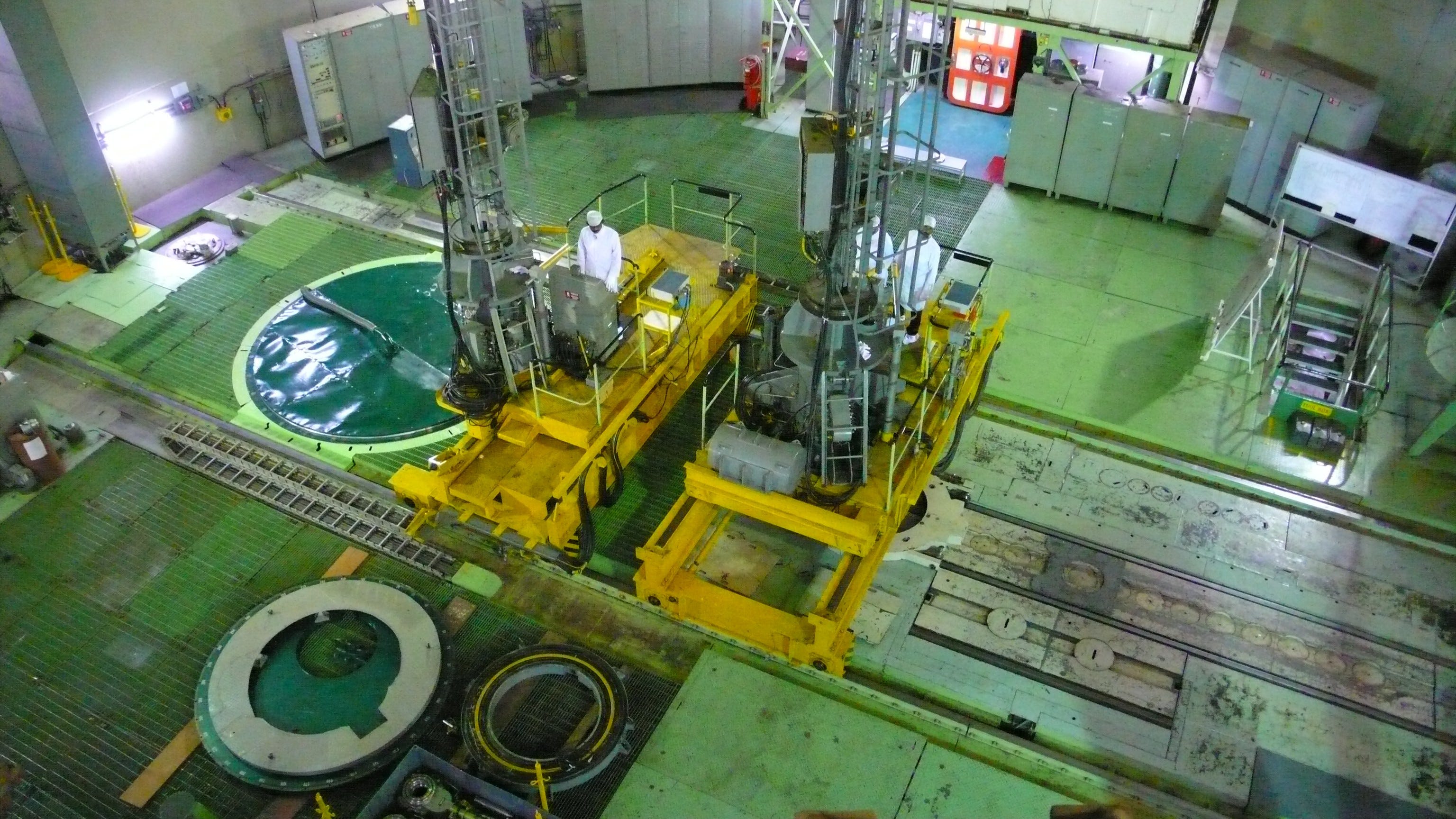
Standard reactors consume fuel to produce energy. A “Breeder” reactor does something that sounds like financial alchemy: it produces more nuclear fuel than it consumes.
The PFBR uses a mixed oxide core of Plutonium (harvested from the spent fuel of our Stage 1 reactors) and Uranium. As it generates massive amounts of power, it bombards a surrounding blanket of depleted uranium and, crucially, Thorium with fast neutrons.
The “Why” is the magic trick: The reactor transmutes that inert Thorium into Uranium-233, a highly potent fissile material.
But getting here was an engineering nightmare.
Stage 2 is technically excruciating because the PFBR uses liquid sodium as a coolant. Liquid sodium is hyper-efficient at transferring heat, but it is also violently reactive. If it touches air, it catches fire. If it touches water, it explodes.
Mastering a liquid sodium coolant loop at scale is a barrier that has humbled superpowers. By attaining criticality this week, India has proven it can tame this technology.
The bottleneck has been broken.
III. The Thorium Moonshot: Beach Sand is the New Oil
With Stage 2 now operational, the door to Stage 3 is wide open.
Stage 3 is where India transitions to reactors powered entirely by Thorium and Uranium-233. For decades, Thorium was dismissed by Western analysts as a “theoretical future”—a science project perpetually thirty years away.
Kalpakkam changes the timeline. We are officially moving toward a visible 10-to-15-year horizon where Thorium becomes the primary fuel driving Indian industry.
Think about the geopolitical implications.
This transforms the monazite beach sands of Kerala and Tamil Nadu into a strategic asset arguably more valuable, and infinitely denser, than Middle Eastern oil. It shifts the geopolitical gravity from the uranium mines of the Steppe to the coastlines of the Subcontinent.
IV. The “Aatmanirbhar” Alpha
For capital markets, there is a deeper layer to this milestone.
When India builds standard Light Water Reactors, we often rely on Russian (Rosatom) or French (EDF) technology. We buy their designs, and we buy their fuel.
The PFBR, however, is entirely, indigenously designed and executed by the Bharatiya Nabhikiya Vidyut Nigam Limited (BHAVINI).
For your portfolio and your macro models, the play here isn’t just the generic ESG thesis that “nuclear is green.” It is the realization that India is aggressively building a proprietary, closed-loop energy ecosystem.
When a nation controls its own fuel synthesis, reactor design, and power generation, it mints a new kind of sovereign alpha. It shields its manufacturing base from global commodity shocks. It guarantees uninterrupted, zero-carbon baseload power for the data centers and AI supercomputers of the 2030s.
V. The Bottom Line
Image generated by Grok
The energy transition is punishing those who rely on intermittent power and imported fuel.
Capital is quietly mapping these constraints. The smart money knows that as the world scrambles for a shrinking pool of enriched uranium, India is quietly stepping out of the line entirely.
Thorium is no longer a blueprint.
The fuel of the future just got its engine.
Disclaimer: I am not a registered SEBI Research Analyst and anything in the above article should not be construed as a recommendation. This should be read solely for education purposes.