
Let’s look at the numbers and reasons
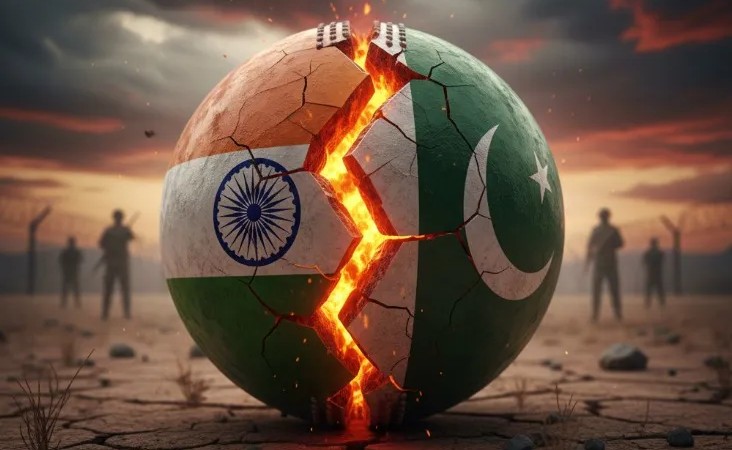
Cricket between India and Pakistan is never “just a game.” It is a geopolitical event disguised as sport, a clash watched by over a billion people, loaded with history, emotion, and symbolism. Every time these two nations meet on the field, it becomes the most expensive in world cricket. But after the recent civilian attacks in Kashmir, calls have grown louder in India to boycott Pakistan on the cricket field.
The argument is simple: why let Pakistan earn revenue and legitimacy through the sport we dominate?
But the real question is: does a cricket boycott actually hurt Pakistan in any meaningful way, or is it largely symbolic? To answer that, we need to follow the money, the signals, and the broader economic playbook India already wields.
Part I: The Financial Ecosystem of a High-Stakes Match
The immediate idea is to starve the Pakistan Cricket Board (PCB) of revenue. The logic is simple: no game, no money for them. But the revenue streams from a multi-nation tournament like the Asia Cup are complex and pooled. The money doesn’t just flow to the host board; it’s distributed among a web of stakeholders. To understand the impact of a boycott, we need to follow the money.
Broadcasting and Advertising Revenue: The Giant Slice of the Pie
This is the biggest revenue generator. The value of a multi-team tournament is astronomically inflated by one fixture: India vs. Pakistan. An estimated 60-70% of the entire tournament’s broadcast value is tied to this single game. Broadcasters pay a premium specifically for the eyeballs this clash generates. For instance, Sony Pictures Networks India (SPNI) bought the rights for the Asia Cup until 2031 for a staggering $170 million. A single 10-second advertisement slot during an India-Pakistan match can cost anywhere from ₹14-16 lakh.
Who gets paid? The primary beneficiary is the Asian Cricket Council (ACC), not the PCB directly. The ACC, of which the Board of Control for Cricket in India (BCCI) is the most powerful member, then distributes this revenue to all member boards. A boycott would crater the tournament’s value, hurting the ACC and, by extension, the finances of all Asian cricketing nations, including Sri Lanka, Bangladesh, and Afghanistan. The PCB would lose its share of this pie, but so would everyone else. The direct financial hit to the PCB is therefore diluted and indirect.
Sponsorships and Merchandising
Similarly, title sponsors and associate sponsors pay a premium for visibility during the high-traffic India-Pakistan match. No match means clauses are triggered, fees are reduced, and bad faith is established. This, again, primarily impacts the ACC and the tournament organizers, who in turn would be less inclined to pay host boards a premium in the future.
Match Fees & Hosting Costs
The host board (in this case, the PCB) earns directly from gate receipts and local hospitality. A full stadium for an India-Pakistan match is a cash cow. A boycott would see this revenue vanish, which is a direct hit to the PCB’s bottom line. However, it’s important to note that this is likely the smallest of the three major revenue streams in a large tournament context. For a nation-state, this is a rounding error. Denying Pakistan this fee is a symbolic pinch, not a body blow.
The immediate, direct economic impact of boycotting one match is relatively minor. It’s a protest of principle, not a tool of profound economic coercion.
Part II: The Indirect Impact: Where the Real Power Lies
This is where the picture gets more nuanced. The true power of a boycott isn’t in the account books of the PCB for this tournament; it’s in the precedent it sets and the signal it sends.
Precedent and Escalation
A boycott is rarely a one-off. It’s a part of a larger spectrum of measures. It reinforces a hardened Indian position, making it easier to justify and implement more severe economic actions in the future. The message isn’t “We won’t play you today.” It should be: “The future of all cricketing relations is now off the table indefinitely.”
Devaluing the ICC Ecosystem
Imagine if the BCCI, backed by a political mandate, announced a complete cessation of bilateral and multi-lateral cricket against Pakistan. No World Cup clashes, no Asia Cups, nothing. This is where the pain amplifies. The BCCI is the undisputed financial engine of world cricket. With an estimated net worth of over ₹18,760 crore in 2025, India’s cricket board is the wealthiest in the world, far surpassing the next richest, Cricket Australia. The PCB, in contrast, has a net worth of around ₹458 crore. An India-less World Cup, or one without its most lucrative fixture, would devalue the ICC’s broadcasting and sponsorship deals by billions of dollars. The ICC, in turn, would face immense pressure from all other member nations who rely on its distributions. This would isolate Pakistan within the ICC ecosystem far more effectively than any single-board decision.
Legitimacy and Normalization
Cricket matches are the most visible, people-to-people connection between the two nations. Playing a game amid escalating violence and terror normalizes the relationship. It sends a message that such attacks are “background noise” that won’t disrupt the biggest spectacle in subcontinental sports. A boycott, therefore, is a powerful political statement. It says that business cannot continue as usual. It forces the global sporting community to acknowledge the geopolitical tension, breaking the bubble of artificial normalcy.
Part III: Beyond the Boundary: India’s Actual Economic Playbook
If we truly want to talk about inflicting economic cost, we must look at what India has already done and can do further. The cricket boycott is a sideshow to the main economic theatre. We have a playbook for this.
MFN Status Withdrawal (2019 Pulwama attack)
India revoked Pakistan’s Most-Favoured-Nation trade status. This hit Pakistan’s textile and cement industries hard, while India easily found other markets. Bilateral trade fell from over $2 billion to almost nothing.
Indus Waters Treaty Leverage
India controls three eastern rivers and can stop its unused share from flowing into Pakistan. Since 80% of Pakistan’s water comes from the Indus system, any disruption threatens its farming and food security — far bigger than cricket money.
Airspace Closure (post-Balakot strikes)
India shut its airspace to Pakistani flights, forcing costly detours. Pakistan International Airlines lost millions in fuel and revenue — a direct economic blow.
__________________________________
A cricket boycott may pinch Pakistan’s cricket board in the short term, but it is not, and cannot be a standalone economic weapon. Its true value lies in symbolism, in signaling a hardened stance, and in denying Pakistan the legitimacy that comes from the world’s most-watched sporting rivalry. And it won’t happen with only handful of us deciding to boycott. It has to be mass-movement.
Also, if India truly wants to squeeze Pakistan economically, the levers of trade, water, and airspace have always been, and will remain, far more powerful.
Cricket is the headline. Economics is the story. And India, with its size and leverage, already knows how to write it.