The US invasion of Venezuela on January 3, 2026, has fundamentally altered the geopolitical calculus. With the “Twelve-Day War” (June 2025) failing to completely neutralize Iran’s nuclear ambitions and the regime now facing one of its most severe internal uprisings since 1979, the probability of Iran becoming the next direct target has shifted from “containment” to “active destabilization.”
1. Context & Drivers
The situation is driven by three converging factors:
- The Economic Collapse (The Trigger): Following the “Snapback” of UN sanctions in September 2025, the Iranian Rial has collapsed to 1.47 million per USD. Annual inflation is effectively uncapped (42%), acting as the primary fuel for the current protests.
- Nuclear Breakout (The Threat): Despite the Israeli/US strikes in June 2025, Iran’s program has accelerated. The IAEA reports (simulated context) indicate Iran is enriching at 60% purity at Fordow. They have accelerated the nuclear program and are developing it as a deterrent for further attacks.
- The “Twelve-Day War” damaged facilities but validated Iran’s doctrinal need for a nuclear deterrent.
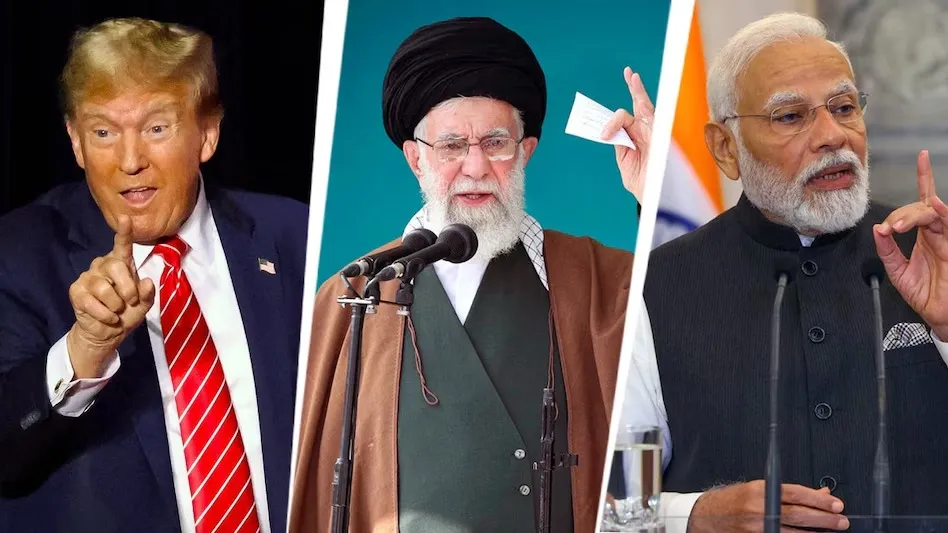
- US Trade War Declaration: On January 13, 2026, President Trump directly intervened in Iran’s internal crisis via a Social Media post, explicitly urging protestors to “take over the institutions” and promising that “Help is on the way.” This marks a critical pivot: the US is no longer just observing the uprising but actively attempting to bolster anti-regime forces to accelerate a collapse. Earlier, he signed an executive order imposing a 25% tariff on any country doing business with Iran. This “secondary sanction” effectively weaponizes the US market against Iran’s trading partners, forcing nations like India to choose between the US market ($212.3B trade in 2024) and Iranian ties ($2.31B trade in 2024).
- The US “Interventionist” Pivot: The US invasion of Venezuela on January 3, 2026, and the subsequent capture of President Maduro, has established a new operational norm. The administration is signaling that “sovereignty is no longer a shield” for regimes deemed hostile, explicitly linking the Venezuela operation to re-establishing “absolute deterrence” against Tehran.
2. Narrative Breakdown: The “5 Whys” of Escalation
To understand why Iran is the likely next target, we must peel back the layers of causality:
- Why is the US targeting Iran now?
- The regime is viewed as terminally vulnerable due to the countrywide protests and killing of its own citizens for protesting.
- Why are these protests different from 2022?
- It came on the heels of US-Venezuela attack in which it captured the president Maduro for drug trafficking and other charges. Trump has repeatedly called himself the Man of Peace and desperately wants the Nobel Peace Prize. This is his moment to reckon in disguise of popular movement, US can do regime change and put a proxy to govern Iran from where 80% -90% of oil supplies are going to China ($14.5B exports in Year to Oct 2025)using shadow fleets.
- Why is the regime unable to crush them?
- The IRGC Ground Forces are overstretched and suffering morale failure (rare refusals to open fire on protestors reported on Jan 8), a direct result of attrition from the June 2025 war.
- Why was the June 2025 war inconclusive?
- It was an air/missile campaign (”Twelve-Day War”) that degraded hardware but left the political leadership intact. Iran’s nuclear program has reportedly accelerated after that.
- Why is this the “End Game”?
- The US administration has concluded that containment has failed. With the nuclear program rebuilding and the “Axis of Resistance” (Iraq/Syria militias) destabilizing the region, the US is moving to a “Decapitation Strategy”—using internal chaos as the justification for forcing a regime change.
3. Implications for India
If the US escalates from “Maximum Pressure” to “Direct Intervention” the impact on India will be structural, not just transient.
India’s trade with Iran dropped significantly after the US sanctions in 2018.
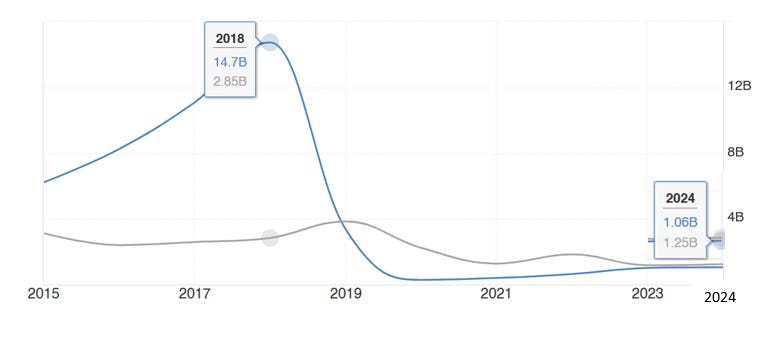
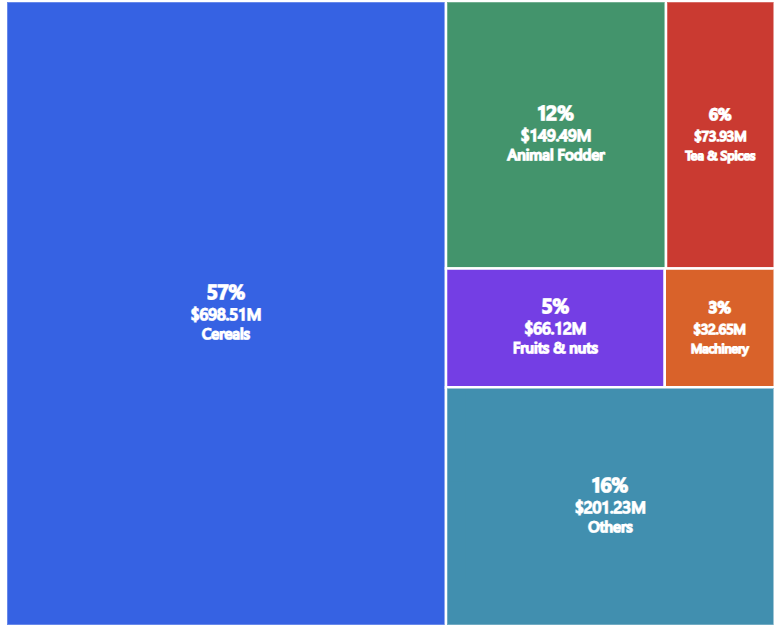
India’s export to Iran in 2024. Total $1.25B of which 57% is cereals (rice).
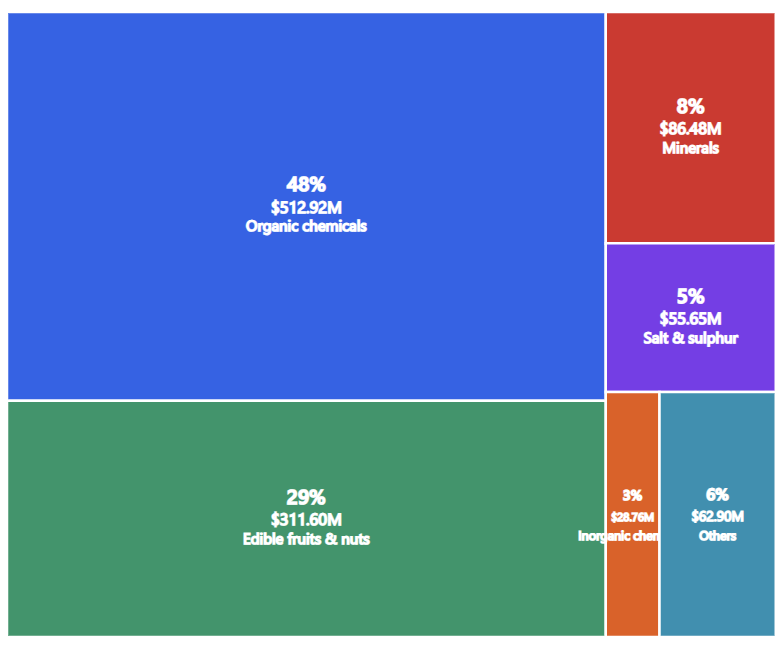
India’s imports from Iran in 2024. Total $1.06B
a. The Oil Shock
- Brent crude is currently ~$64/bbl. A blockade of the Strait of Hormuz (threatened by Iran during previous conflicts) would push prices to $90–$100/bbl.
- Impact: A $10 a barrel increase in the average price of crude oil in FY26 will typically push up net oil imports by about $13-14 billion, enlarging the CAD by 0.3% of GDP as per reports by ICRA.
b. The Trade Corridor Collapse
- INSTC closure: The International North-South Transport Corridor (INSTC) which connects India, Iran, Central Asia, Russia, and Europe via Chabahar (The Gateway to Central Asia). Any escalation of civil unrest or conflict in Iran creates a critical bottleneck for India. It immediately neutralizes the INSTC’s 30% logistics cost advantage, forcing a reversion to expensive routes that damages export competitiveness. This disruption jeopardizes India’s $2 trillion export target by 2030 and physically severs the vital link to Central Asia, effectively blocking access to key markets and strategic mineral reserves.
- Export Crisis: India’s basmati rice exports (cereals) to Iran face a severe crisis following a sharp crash in the Iranian rial and the subsequent withdrawal of food import subsidies by Tehran along with additional 25% Trump Tariff on countries doing business with Iran. This has left consignments worth Rs 2,000 crore stranded at ports as Indian exporters halt shipments due to payment uncertainties. The disruption is particularly damaging to millers in Punjab and Haryana, as they supply nearly 40% of the 12 lakh tonnes to Iran annually. Domestic basmati prices have dropped by 7% per kg, creating cash flow issues for exporters and raising concerns for farmers ahead of the next procurement season.
c. Strategic Autonomy Stress Test
- Diplomatic Squeeze: The US invasion of Venezuela and potential strikes on Iran create a “With us or against us” binary. India’s balancing act (maintaining ties with Iran for energy/connectivity while partnering with the US on tech/defense) may become untenable, which is evident from the nosediving of trade since 2018.
Meanwhile, arriving in New Delhi in January 2026, Ambassador Sergio Gor prioritized resetting ties, asserting that “no partner is more essential than India.” He downplayed recent tariff frictions as disagreements between “real friends,” confirming the immediate resumption of trade talks.
4. Why is Iran not another Venezuela?
a. The “Supply vs. Access” Distinction
While both Iran and Venezuela are petro-states that have faced severe sanctions, the nature of their leverage over the global economy is fundamentally different.
- Venezuela (Supply-Side Risk): Venezuela’s power was derived strictly from its proven reserves. When sanctions effectively took Venezuelan oil off the market, the global system adapted. Competitors with spare capacity (such as the US shale industry, Saudi Arabia, and Canada) ramped up production to fill the gap. Venezuela was a participant in the market; its removal was a supply shock that could be mitigated by substitution.
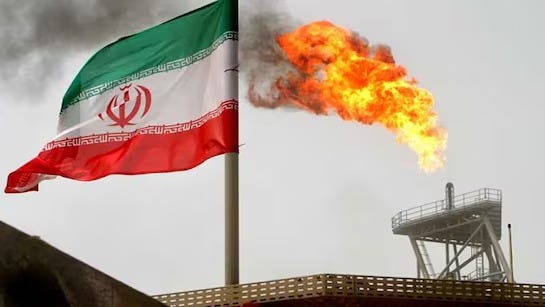
- Iran (Transit-Side Risk): Iran’s leverage is derived not just from its own oil, but from its geography. As the “Gatekeeper” of the Strait of Hormuz, Iran possesses transit leverage. It controls the physical chokepoint through which its primary competitors (Saudi Arabia, UAE, Kuwait, Iraq) must export their resources.
b. The “Hostage” Mechanism
The critical differentiator is the capability to affect third-party trade.
- Isolation vs. Blockade: A collapse in Venezuela isolates only the Venezuelan economy. In contrast, a conflict involving Iran has the asymmetric capability to blockade ~20% of the world’s oil supply.
- The “No Alternative” Factor: Unlike the Red Sea/Suez route, which has the Cape of Good Hope as a backup, the Strait of Hormuz has no viable alternative for the volume of crude that passes through it.
- Systemic Consequence: Iran effectively holds the energy security of major economies (China, India, Japan) hostage. It can convert a bilateral conflict (e.g., US-Iran) into a global economic crisis by severing the “global artery.”
Iran cannot be categorized simply as “another Venezuela” because it possesses the ability to weaponize the flow of global trade, not just its own contribution to it. While Venezuela’s risk was economic and localized, Iran’s risk is geostrategic and systemic.
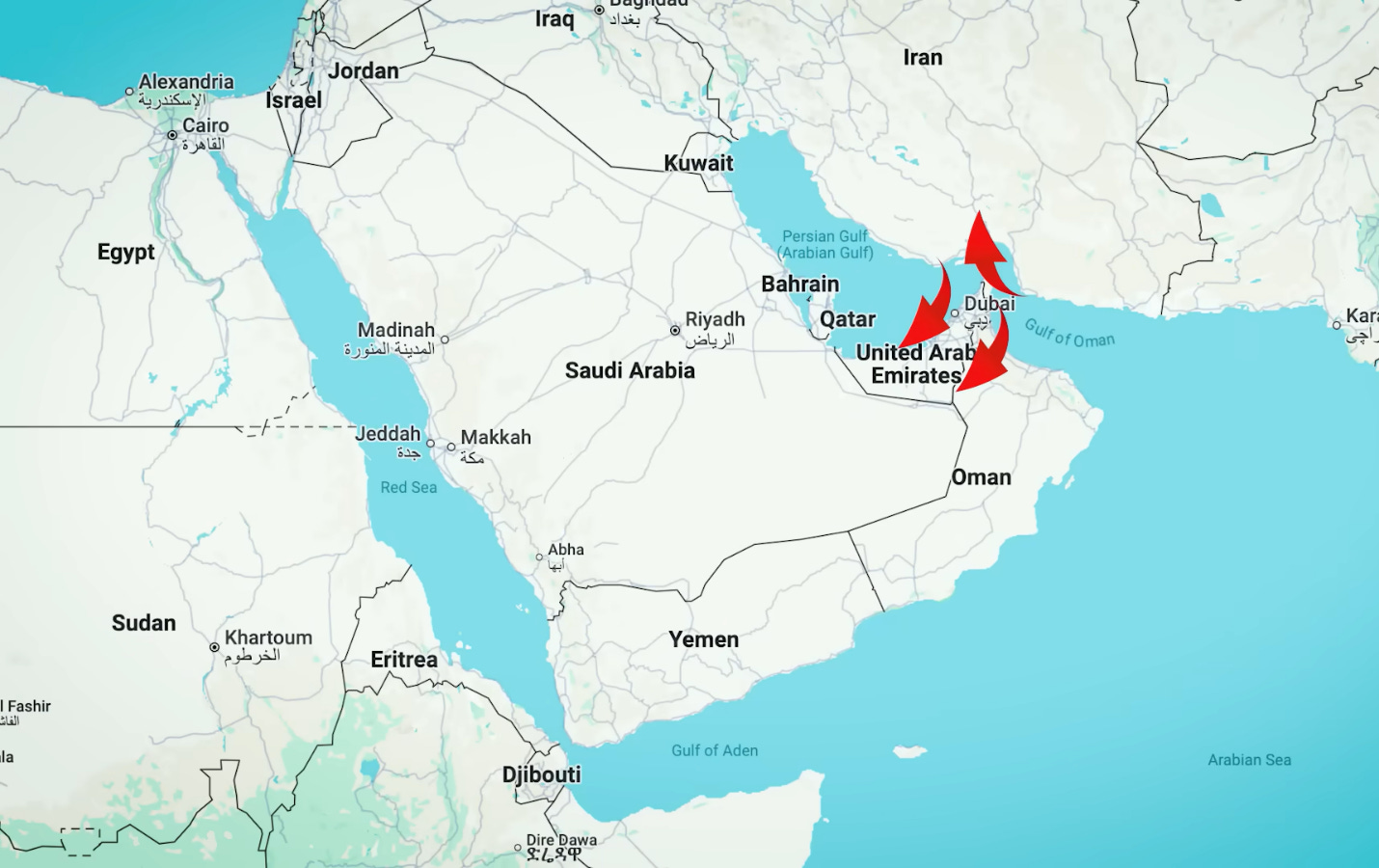
Strait of Hormuz
5. Conclusion: The “Hostage” Trap & The End of Strategic Autonomy
The events of January 2026 have shattered the illusion of a “Gray Zone” conflict. For India, the US shift from containment to “decapitation” in Tehran reveals a stark vulnerability: Geography is destiny, and India is on the wrong side of the chokepoint.
- The Sovereignty Illusion: The invasion of Venezuela proves that sovereignty is no longer a shield for regimes that threaten US hegemony. However, Iran is not Venezuela. While the US could isolate Venezuela’s supply, it cannot isolate Iran without triggering a systemic collapse of global energy transit.
- The “Hostage” Mechanism: Iran possesses the asymmetric capability to weaponize the Strait of Hormuz—effectively holding 20% of the world’s oil supply hostage. For India, this is not merely an inflationary risk (oil prices); it is a strangulation risk.
- Strategic Encirclement: A US-forced regime change or prolonged conflict in Iran risks severing the INSTC and the Chabahar gateway permanently. This would erase India’s only viable land route to Central Asia, leaving New Delhi geopolitically encircled.
The “With us or against us” binary has arrived, and New Delhi faces the nightmare scenario of balancing between its energy security (Iran ties) and its strategic alignment (US partnership).
Contributed by my student – Abhijeet Kumar (IIM Indore, PGP 2026)
Disclaimer: I am not a registered SEBI Research Analyst and anything in the above article should not be construed as a recommendation. This should be read solely for education purposes.