
What’s that, and what is the deal all about?
When I was preparing to teach Mergers & Acquisitions to MBA students earlier this year, I found myself revisiting some of the most iconic cross-border M&A deals by Indian companies.
Unsurprisingly, the Tata Group stood out.
They’ve long been at the forefront of India Inc’s global ambitions, especially when it comes to big-ticket acquisitions, many of which were targeted at European companies.
Two deals immediately come to mind:
🔹 Tata Steel’s acquisition of Corus in 2007 for $12 billion – a record at the time.
🔹 Tata Motors’ purchase of Jaguar Land Rover (JLR) in 2008 for $2.3 billion, which remains one of the most studied M&A cases in Indian business schools.
But were these deals successful?
As they say, over 70% of M&A deals fail. Cross-border ones come with additional complexities – culture, regulation, integration, and market dynamics.
The Tata–JLR deal is often considered a rare success story (or is it?). From a struggling luxury brand at the time of acquisition, JLR went on to become a cash-generating asset for Tata Motors for several years, though not without phases of volatility.
Now, Tata Motors is making headlines again, this time with the acquisition of Iveco’s premium truck brand for $4.6 billion, nearly twice the JLR deal size.
Let’s break this down and see what Tata Motors is really betting on this time.
Tata Motors boards Iveco bus
The spotlight in 2025 continues to be on Tata Motors with its latest and largest automotive deal – the €3.8 billion ($4.4 billion) acquisition of Italy’s Iveco Group, a move that reshapes the global commercial vehicles landscape. This isn’t just another tick on Tata’s long list of overseas buys; it positions the company as a top-tier global player, with minimal overlap and significant new value added across technology, reach, and scale.
Iveco: Why it Matters
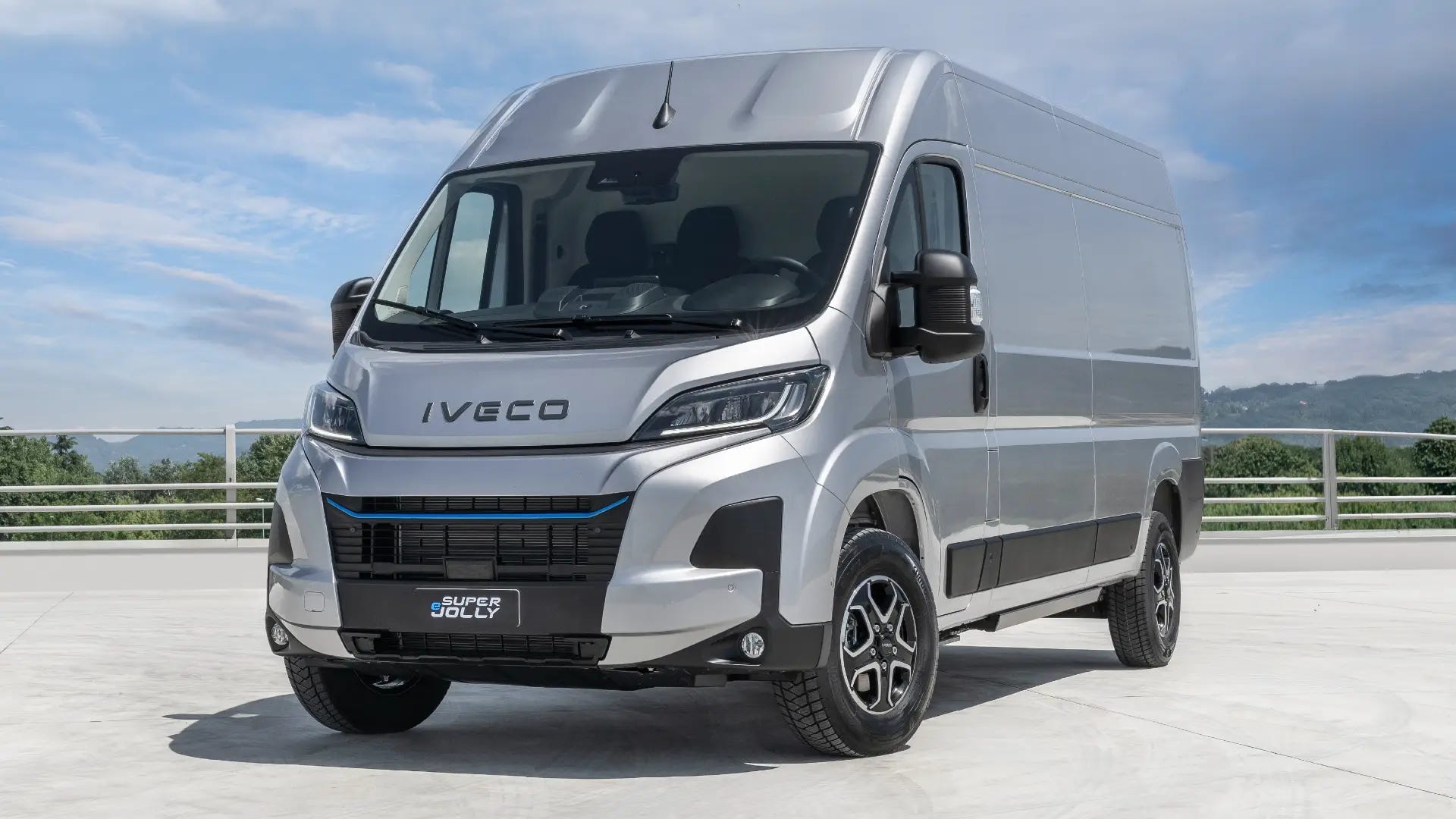
Iveco isn’t a household name for many Indian readers, but in global transport circles, it’s a giant. Headquartered in Turin, Italy, it designs and builds everything from light vans to heavy-duty trucks and buses. It operates manufacturing plants in Europe, China, Russia, Australia, and Latin America, serving over 160 countries and producing around 150,000 vehicles annually. The company has deep R&D in electrification and alternative fuels, and a long history as a product innovator in urban and long-haul vehicles.
- 2024 Revenue: €15.2 billion
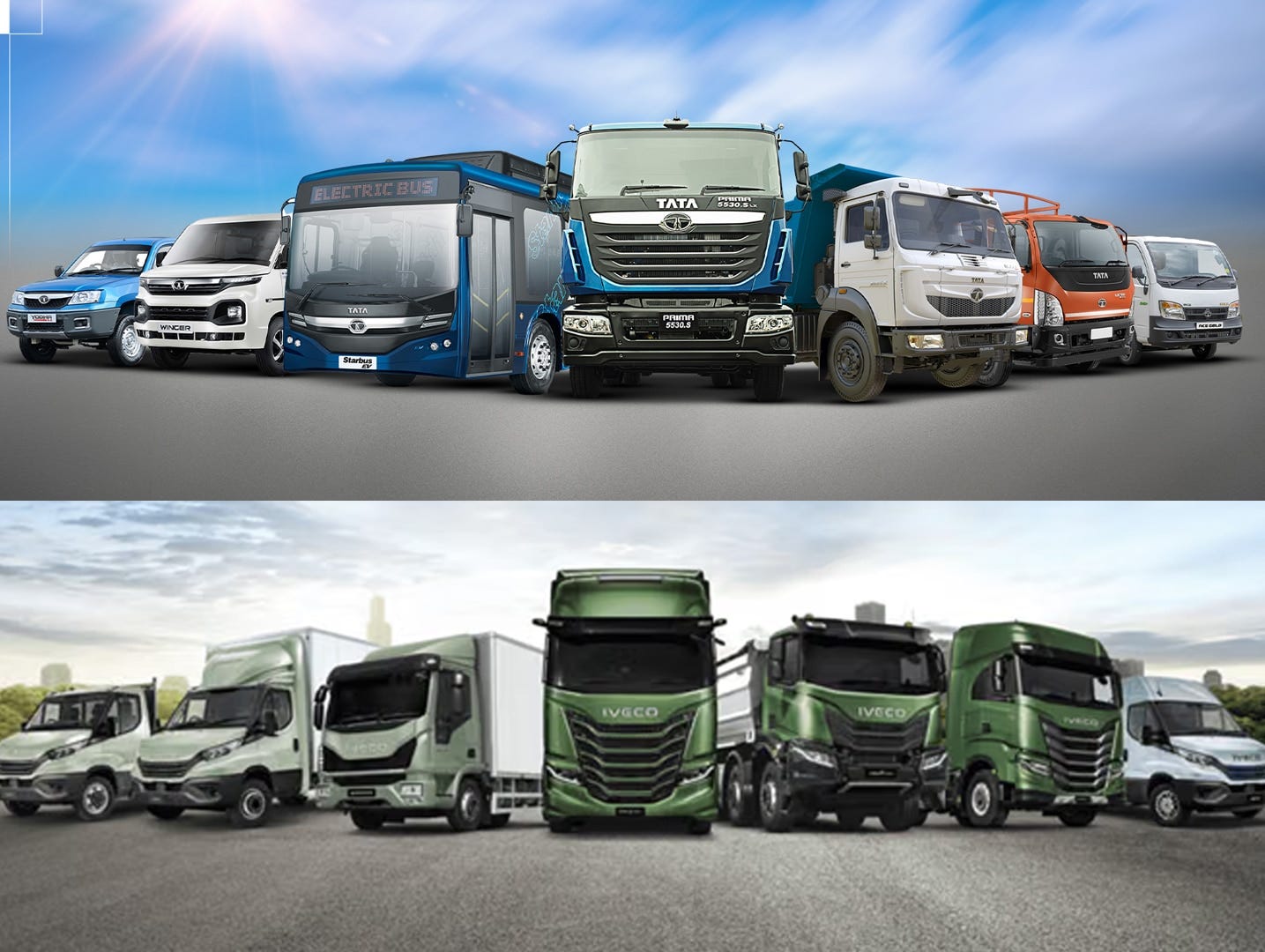
- Product Portfolio: Light/medium/heavy trucks (Daily, Eurocargo, S-Way, X-Way), city buses, and specialty vehicles.
- Employees: 34,000+ worldwide
- Global Presence: Strongest in Europe and Latin America, with growing markets in Asia and Africa.
Anatomy of the Deal
- Price: €3.8 billion (~$4.4 billion, ~₹34,600 crores), all-cash
- Structure: Acquisition after the carve-out of Iveco’s defence division. Tata will first acquire 27.06% from Exor (Agnelli family, the promoters), then make a public tender to acquire all shares with intent to fully own and delist Iveco.
- Scale: Combined entity expects revenues of €22 billion, 540,000+ vehicles/year, with revenue split: Europe (50%), India (35%), Americas (15%).
- Timeline: Deal expected to close by first half of 2026, after regulatory and defence carve-out processes.
- Financing: Combination of debt and equity. Primary funding mechanism is a one-year bridge loan fully committed by Morgan Stanley and MUFG. This bridge facility will be used to pay for the all-cash transaction upfront.Over the next 12 to 18 months after closing, Tata Motors plans to replace most of this short-term debt with a mix of:
- Approximately €1 billion in fresh equity raised via a rights issue or Qualified Institutional Placement (QIP).
- Proceeds from monetizing its stake in Tata Capital.
- Strong internal cash flows from business operations.
Strategic Rationale: Value Add Overlap
1. Complementary Footprints
With Tata strong in India/Asia, and Iveco dominating Europe and Latin America, there’s almost no overlap. Together they cover most major and emerging CV markets.
2. Product & Technology Synergies
Iveco brings proven innovation in electric, hydrogen, and natural gas vehicles which are the keys for Tata to quickly offer low-emission models, especially to meet Europe’s tighter standards. Tata’s India footprint enables lower-cost sourcing/production for growth markets.
3. Balanced Exposure, Reduced Volatility
The combined group’s revenue mix is much more globally diversified, lessening dependence on any single market cycle.
4. No Major Restructuring Drama
Tata is agreeing to preserve jobs, plants, and maintain Iveco HQ in Turin, showing a pragmatic, integration-light approach focused on leveraging strengths rather than cost cutting.
Tata Motors’ Acquisition Track Record
This is Tata’s biggest auto deal since the $2.3B Jaguar Land Rover acquisition in 2008. Past expansions (South Korea’s Daewoo in 2004, partnerships in Brazil and China) have steadily built global muscle. The JLR playbook – turning around and globalizing a brand, offers some lessons, but the focus with Iveco is clear: commercial, not luxury, vehicles and the ability to cross-pollinate products and tech at scale.
Management’s View: Not Just Scale, Capability
Tata sees this as a “next logical step” toward building a diversified, globally-relevant commercial vehicles major. Management stresses accelerating electrification, sharing R&D, expanding distribution, and leveraging channel strengths. The approach is practical, not headline-chasing, i.e., focusing on tangible product and operational results.
Risks & What to Watch
- Regulatory approvals: Europe’s “Golden Power” rules, merger control clearances needed.
- Execution: Integration complexity, cultural differences, and global supply chain management won’t be trivial.
- Capital: At €3.8B, this is a big swing. It is ~40% premium to Iveco’s 3 month VWAP. Investors have voiced caution around valuation and leverage, as TaMo’s stock fell by ~3.5% on Wednesday, after announcement.
Iveco Group’s Share Price reaction
- Iveco’s share price, traded on the Milan Stock Exchange, jumped up to 7.4% immediately after the news broke. The stock move reflected investor optimism due to the premium offered by Tata Motors and expectations of a stronger global presence.
- However, post-announcement, after Tata’s offer and concurrent Q2 results, Iveco stock saw a pullback, falling 5.1% on July 31, 2025, as investors digested a guidance cut and mixed business performance alongside the acquisition news.
Demerger of Commercial and Passenger Vehicle business
Tata Motors’ recent demerger, which split its core automotive businesses into distinct Commercial Vehicles (CVs) and Passenger Vehicles plus Electric Vehicles (PVs+EV) divisions, marks a strategic effort to sharpen focus and unlock value across very different segments.
JLR has played the role of a global marquee brand and technology anchor for the PVs+EV vertical. With the Iveco acquisition, Tata Motors appears poised to give its CV division a similar international platform, one that could accelerate product innovation, geographic reach, and technological leadership in commercial mobility just as JLR did for its passenger car ambitions.
In essence, Iveco for CVs could become what JLR became for Tata’s PV business. However, the difference is that TaMo already leads in CVs anyway in India, while PV was a fledgling business during JLR acquisition.
What are your thoughts around this merger?