
A Comprehensive Analysis
The Central Electricity Regulatory Commission’s (CERC) approval of market coupling for India’s power exchanges represents a fundamental shift that threatens IEX’s dominant market position. Here’s what this means in simple terms and how it will impact IEX and the broader power trading landscape.
What is Market Coupling in Simple Terms?
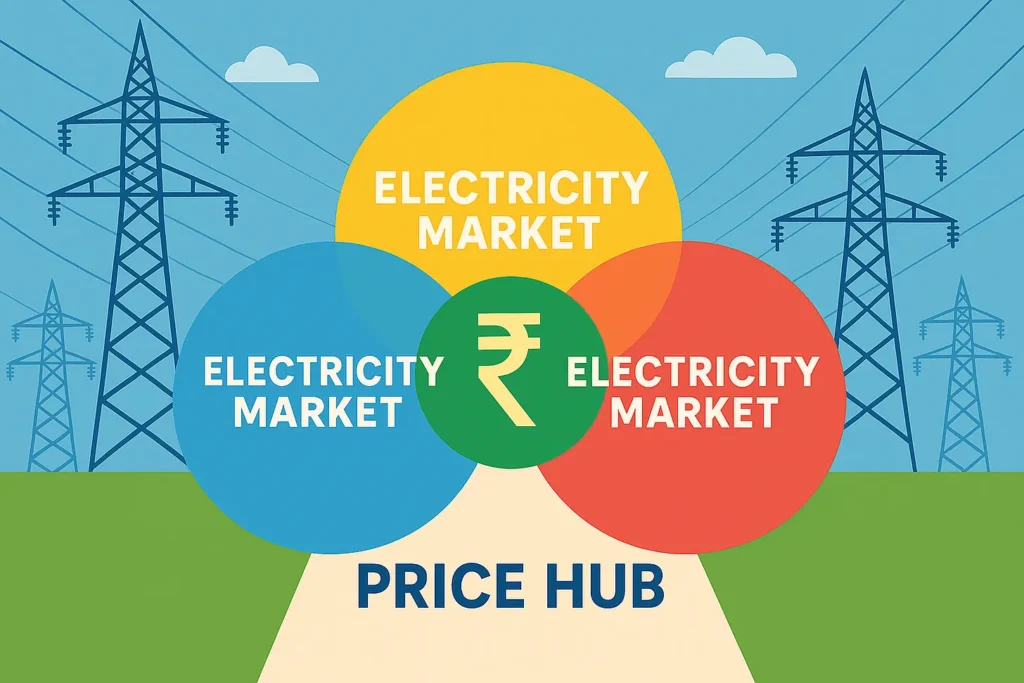
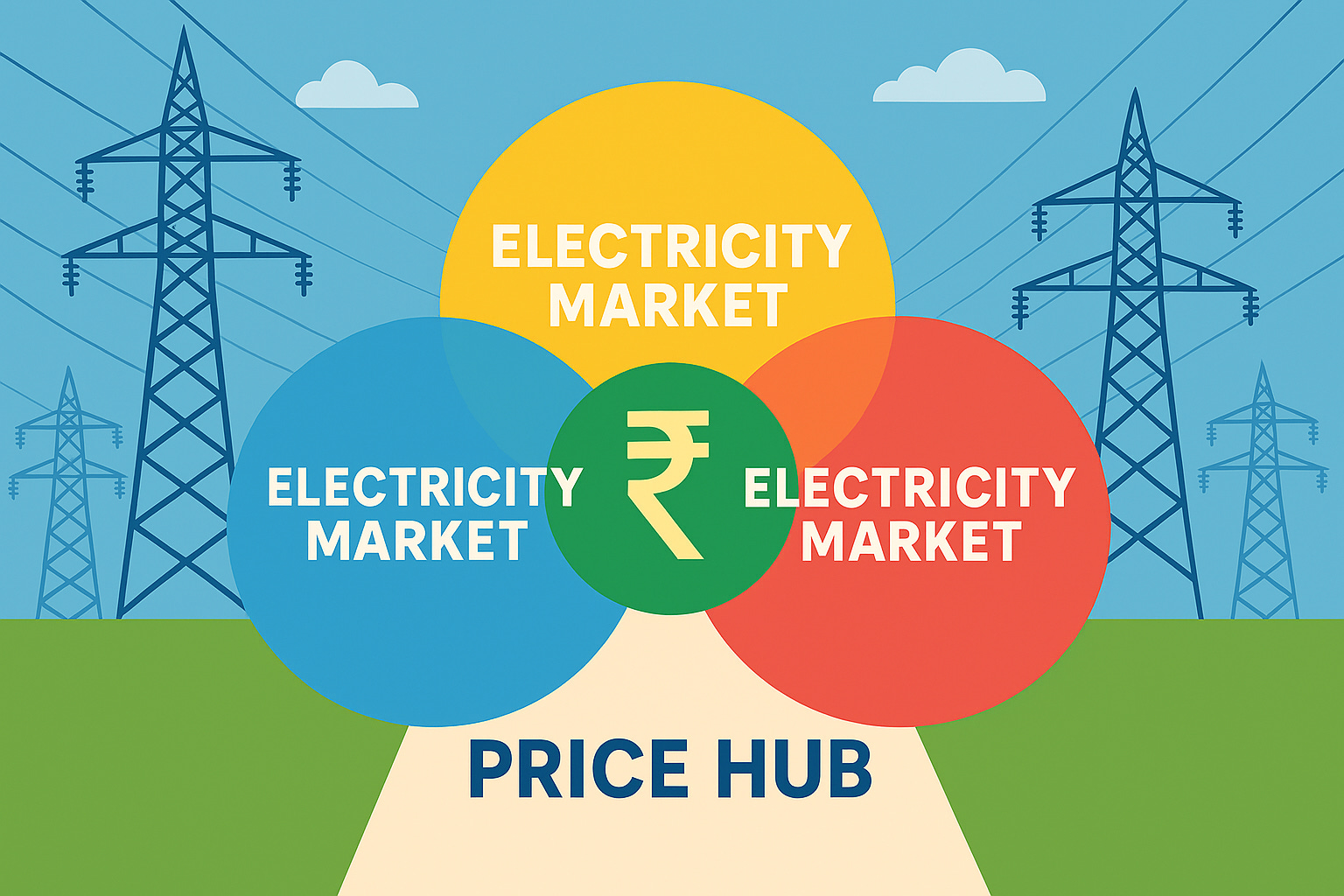
Market coupling is like merging separate marketplaces into one unified market. Currently, India has three power exchanges – IEX, PXIL, and HPX – each operating independently with their own prices for electricity. Think of it like having three separate grocery stores in a city, each with different prices for the same products.
With market coupling, all buy and sell orders from these three exchanges will be pooled together and matched by a central system to discover one uniform price. It’s like having a central coordinator who collects all orders from the three stores and sets one common price for everyone.
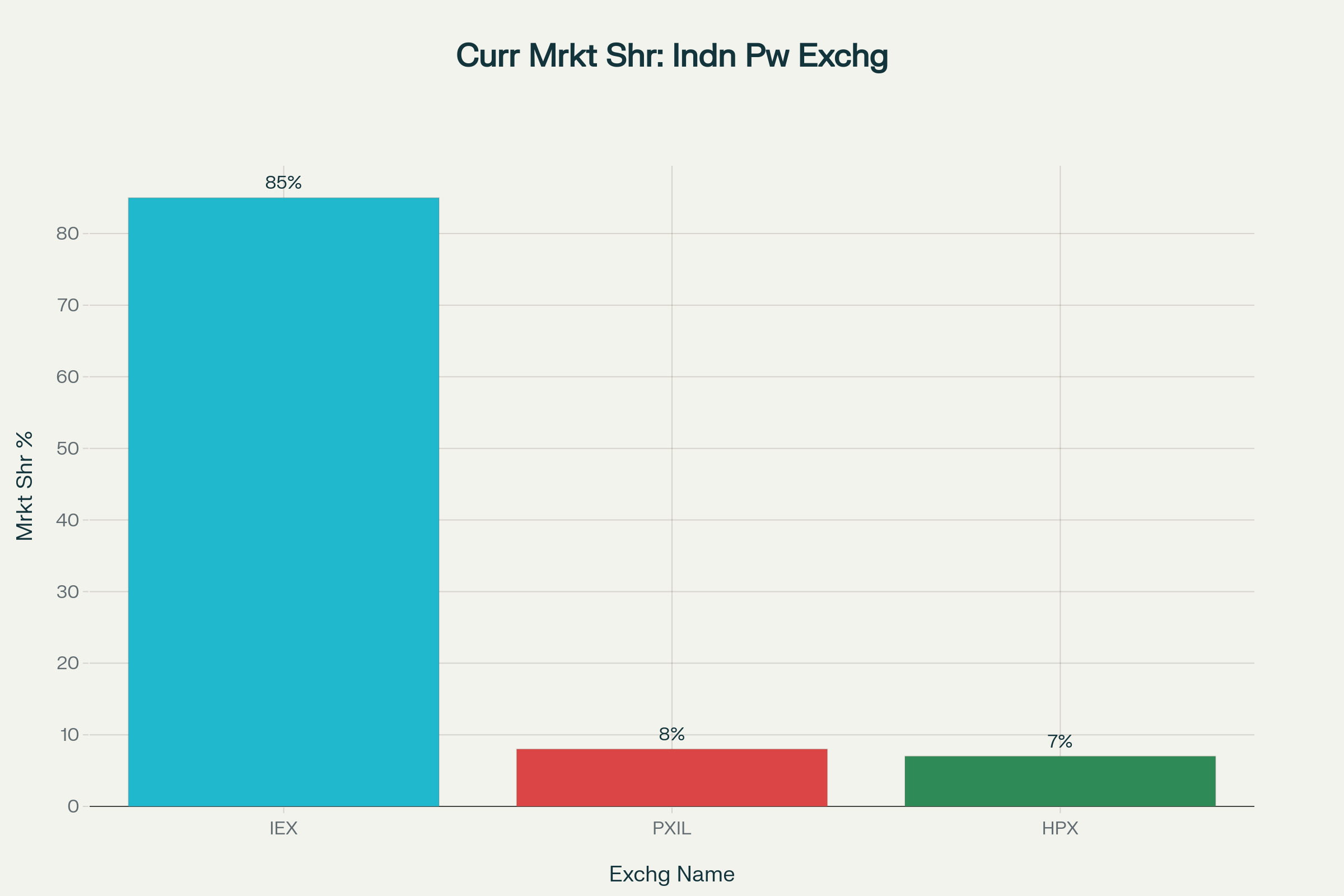
Current market share distribution among India’s three power exchanges showing IEX’s dominance
Understanding Key Terms
Day-Ahead Market (DAM): This is where electricity is bought and sold for delivery the next day. It’s like booking your electricity needs 24 hours in advance, similar to booking a hotel room.
Real-Time Market (RTM): This allows electricity trading just 1 hour before delivery. It’s like ordering food delivery when you’re already hungry – immediate needs.
Market Coupling Operator (MCO): This is the central entity that will collect all bids and determine the uniform price. Grid-India will serve as the MCO with backup and audit roles.
How This Impacts IEX
IEX holds approximately 85% of India’s power exchange market, making it the undisputed leader. This dominance comes from:
- Superior liquidity (more buyers and sellers)
- Better price discovery mechanism
- Strong technology platform
- Market confidence built over 17 years
Revenue Model Disruption
IEX’s business model centers on two key revenue streams that will be significantly impacted:
- Transaction Fees: IEX currently charges 2 paise per kWh from both buyers and sellers. With market coupling, this becomes the only revenue source as price discovery moves to the central operator.
- Price Discovery Premium: IEX’s role as the primary price setter – its most valuable function – will be transferred to Grid-India.
The numbers tell the story: In FY25, DAM and RTM segments contributed nearly 80% of IEX’s revenue. A research report from Axis Capital estimates that if market coupling had been implemented in FY25, IEX’s earnings per share could have been 30% lower.
Implementation Timeline and Phases
The implementation will happen in phases:
Phase 1 (January 2026): DAM coupling using a round-robin model where exchanges take turns as the Market Coupling Operator.
Phase 2 (Later): RTM coupling – deferred due to operational complexities.
Phase 3 (Future): Term-Ahead Market (TAM) coupling after shadow pilot testing.
Why Market Coupling is Being Implemented
Benefits for the Power System
- Uniform Price Discovery: Instead of three different prices, there will be one common price across all exchanges.
- Optimal Transmission Use: Better utilization of power transmission infrastructure by matching supply and demand more efficiently.
- Economic Surplus Maximization: More efficient matching of buyers and sellers creates value for the entire system.
- Increased Liquidity: Combining all orders creates a larger, more liquid market.
Market Reaction
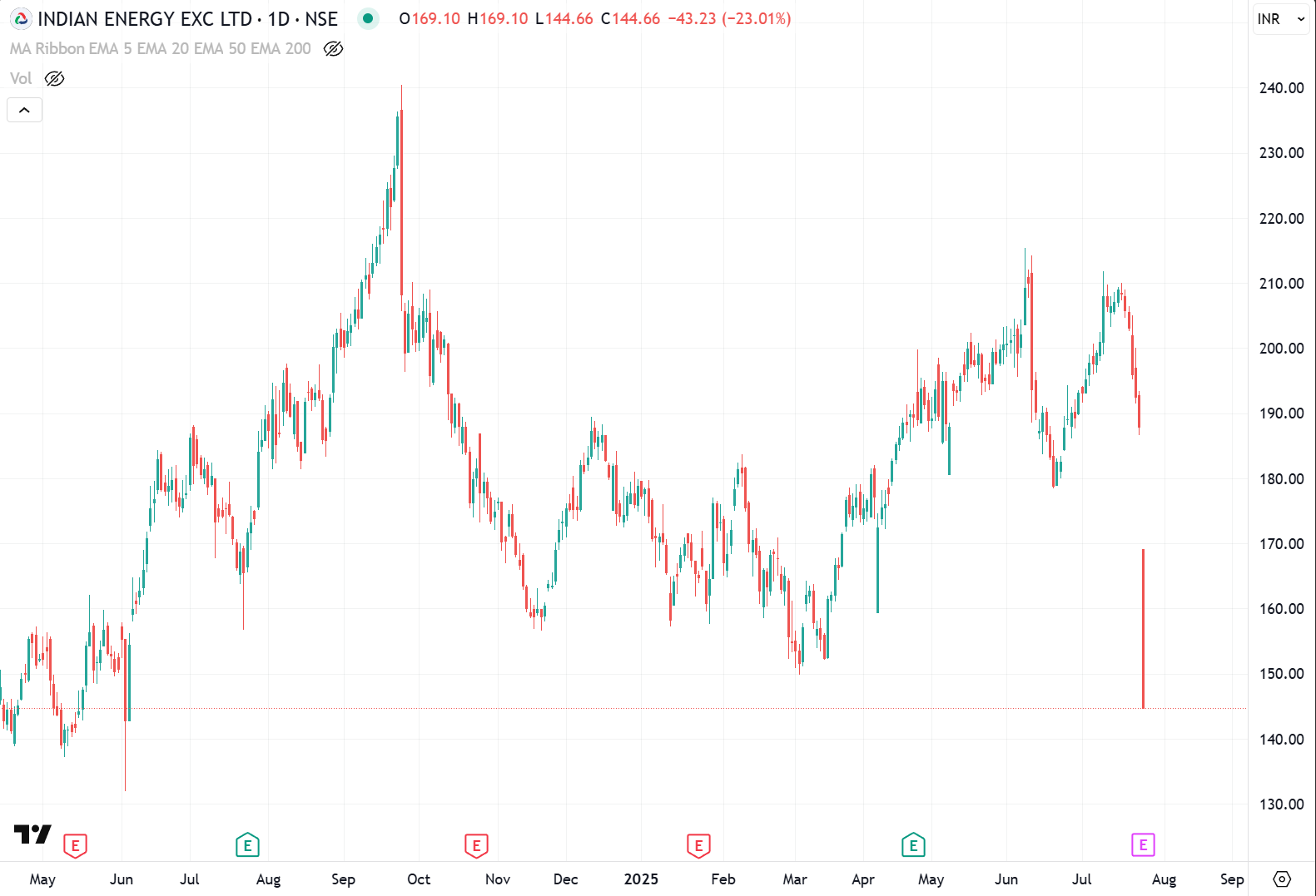
The stock market’s reaction was swift and severe. IEX shares crashed 23% (on 24th July, as at 11:30 am)
What the Shadow Pilot Results Revealed
The four-month pilot (December 2024 – March 2025) showed surprisingly minimal benefits:
DAM Coupling:
- Welfare increase: Only ₹38 crores (0.3%)
- Volume increase: Just 52 MU (0.2%)
RTM Coupling:
- Welfare increase: Merely ₹72 lakh (0.01%)
- Volume increase: Only 1.54 MU (0.01%)
These modest results suggest the theoretical benefits may not translate to significant practical gains in India’s current market structure.
Potential Future Scenarios
Best Case for IEX
- Maintains market leadership through superior technology and services
- Adapts business model to focus on value-added services
- Benefits from overall market growth as coupling increases total volumes
Worst Case for IEX
- Market share dilution as competitors gain equal access to price discovery
- Revenue compression due to loss of pricing advantage
- Transformation into a commodity platform with reduced margins
Most Likely Scenario
- Gradual market share erosion from 85% to potentially 60%
- Increased competition forcing innovation and better services
- Margin pressure but continued leadership due to scale advantages
Long-term Implications
Market coupling represents India’s move toward a more integrated and efficient power market. While challenging for IEX’s current dominance, it could ultimately:
- Increase overall market size by improving efficiency
- Accelerate renewable energy integration through better price signals
- Reduce power costs for end consumers
- Create a level playing field for all exchanges
Conclusion
The market coupling notification is indeed a significant structural shift that explains the sharp decline in IEX’s stock price. While IEX will face challenges to its current dominance, the company’s strong technology platform, extensive client relationships, and operational expertise provide defensive moats.
The key will be adaptation: IEX must evolve from being a price-setter to a premium service provider in a coupled market environment. The modest benefits shown in the pilot suggest the transition may be less disruptive than initially feared, but investors are clearly pricing in the risk of reduced market power and margins.
This is more like NSE / BSE not having any power in pricing of the constituents, but just being a market interface. They compete on products, uptime, etc, which is what now IEX will have to think about doing.
For IEX shareholders, this represents a critical inflection point requiring careful monitoring of how the company adapts its strategy and whether it can maintain its leadership position in the new market structure.