
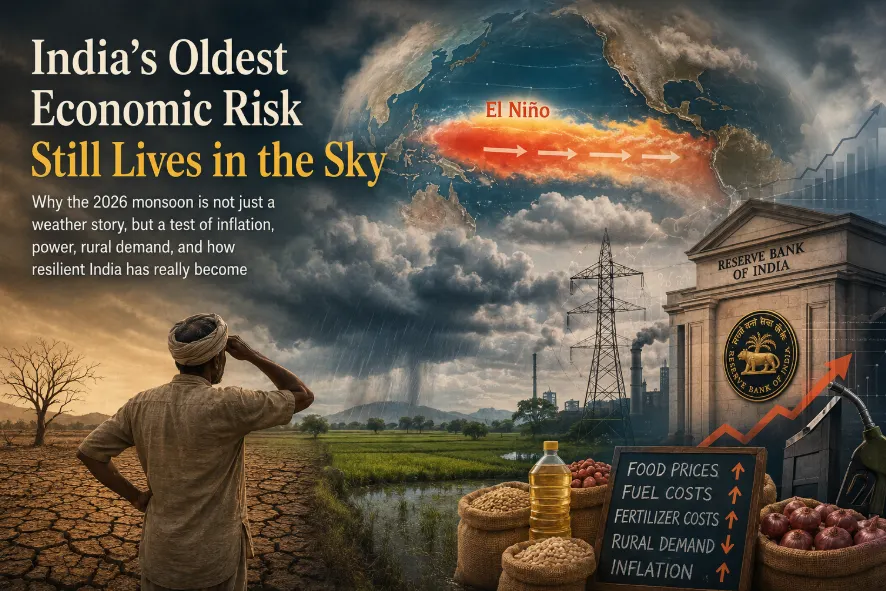
The Super El Niño impact on Indian Economy
In this edition, we will see why the 2026 monsoon is not just a weather story, but a test of inflation, power, rural demand, and how resilient India has really become.
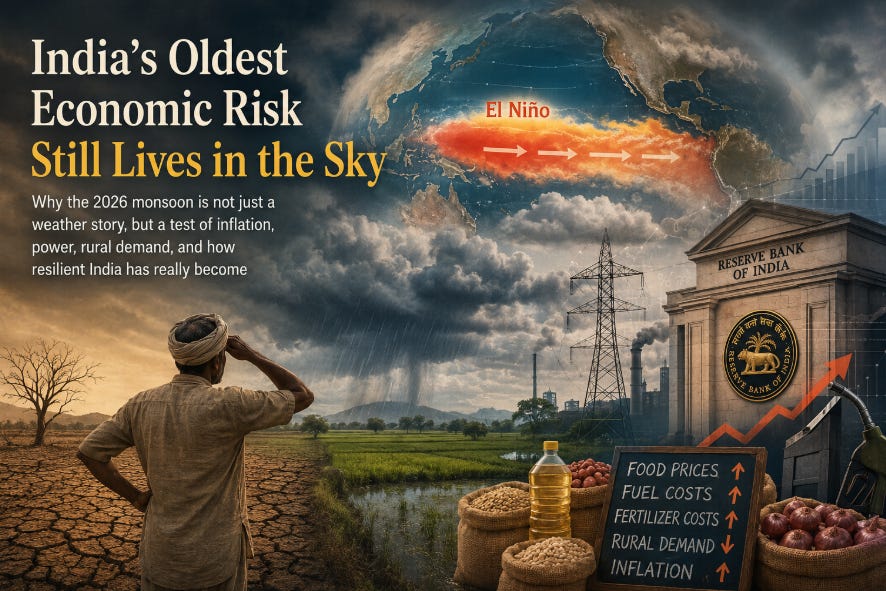
On some mornings in India, the economy does not announce itself through a stock chart or a policy speech. It shows up in the sky.
A farmer stares a little longer at the horizon. A trader refreshes a forecast before the market opens. A policymaker at the RBI weighs food prices against growth. And somewhere far away, in the Pacific Ocean, a warm patch of water quietly begins to reorganize the weather for millions of people who will never see it.
That is the strange thing about El Niño. It sounds distant, technical, almost academic. But in India, it rarely stays that way for long.
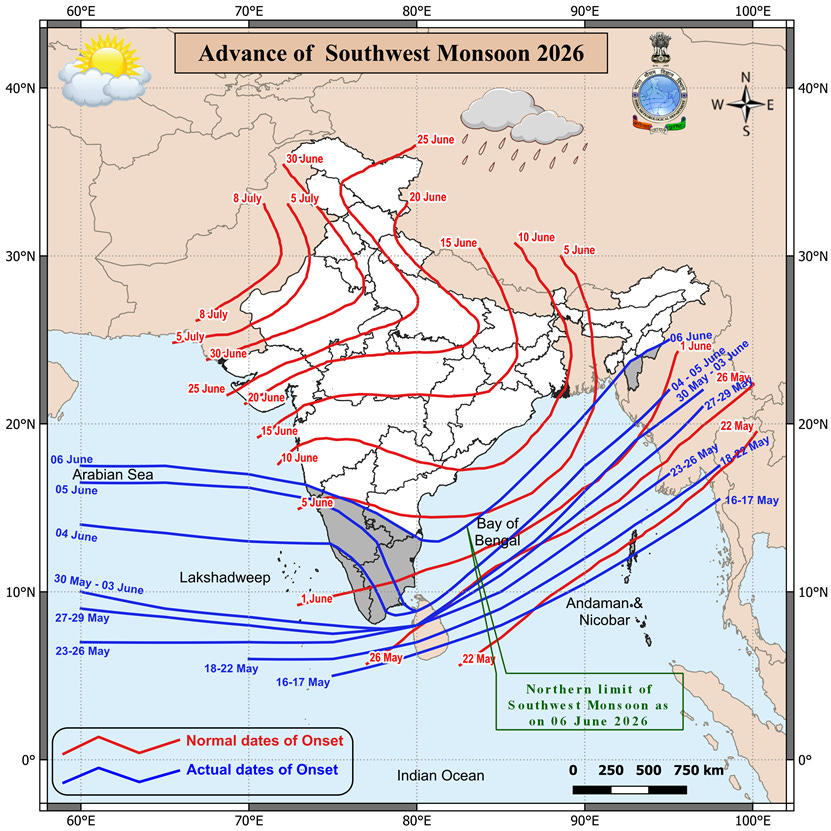
By early June 2026, the monsoon had already become a macro story again. Forecasts pointed to a below-normal season, El Niño conditions were strengthening, and the RBI had already flagged weather-related uncertainty as one of the domestic risks it was watching most closely.
The obvious temptation is to turn that into a simple doomsday narrative: weak monsoon, higher inflation, bad news.
But the real story is more interesting than that.
It is the story of how India still bends, in very real ways, to a climate system that begins thousands of kilometres away. And it is also the story of how much better India has become at absorbing that blow.
The monsoon is not a weather event. It is an economic pulse.
That sounds dramatic until you look at how the country actually works.
The southwest monsoon brings most of India’s annual rainfall. It shapes sowing, reservoir levels, groundwater recharge, food production, rural cash flow, and the spending power of millions of households. A good monsoon does not just help farmers; it ripples through tractors, motorcycles, packaged foods, consumer goods, logistics, and the RBI’s inflation calculus.
A weak monsoon works in reverse.
It is not only the crop that suffers. It is the entire chain after the crop.
Lower farm income means softer rural demand.
→ Softer rural demand means weaker sales for FMCG and auto companies.
→ Less output means firmer food prices.
→ Firmer food prices mean the central bank becomes more cautious.
The weather ends up shaping policy, and policy shapes the economy.
That is why the monsoon keeps returning to the center of Indian macro conversations. It is the oldest variable in the room, and one of the most stubborn.
What El Niño actually does to India
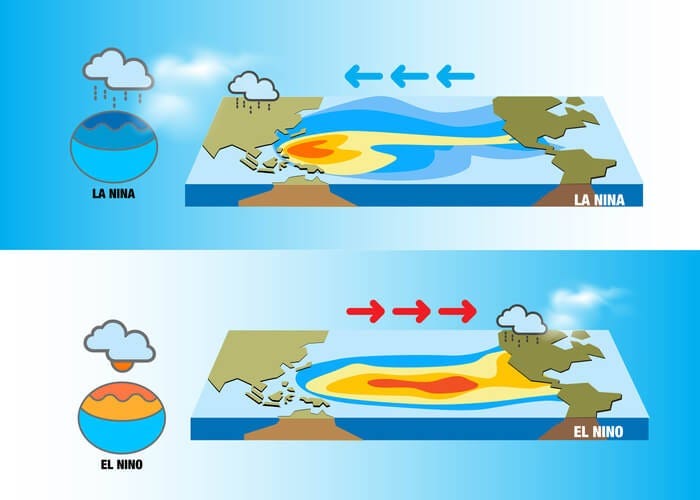
El Niño is part of the ENSO cycle, the oscillation between El Niño and La Niña in the Pacific. During El Niño, trade winds weaken and warm water shifts eastward, changing ocean temperature, pressure, cloud formation, and rainfall patterns across the world. La Niña does the opposite.
For India, the important thing is not the label. It is the direction of the effect.
Think of the Pacific (area east of Asia and west of Americas) as a giant climate engine. In a normal year, trade winds push warm water west toward Asia, where it fuels clouds and rain, while cooler water rises near South America. But when El Niño kicks in, those winds weaken, the warm water slides back east, and the rain belt shifts with it. That seemingly small change is enough to disrupt the pressure pattern that helps drive India’s monsoon.
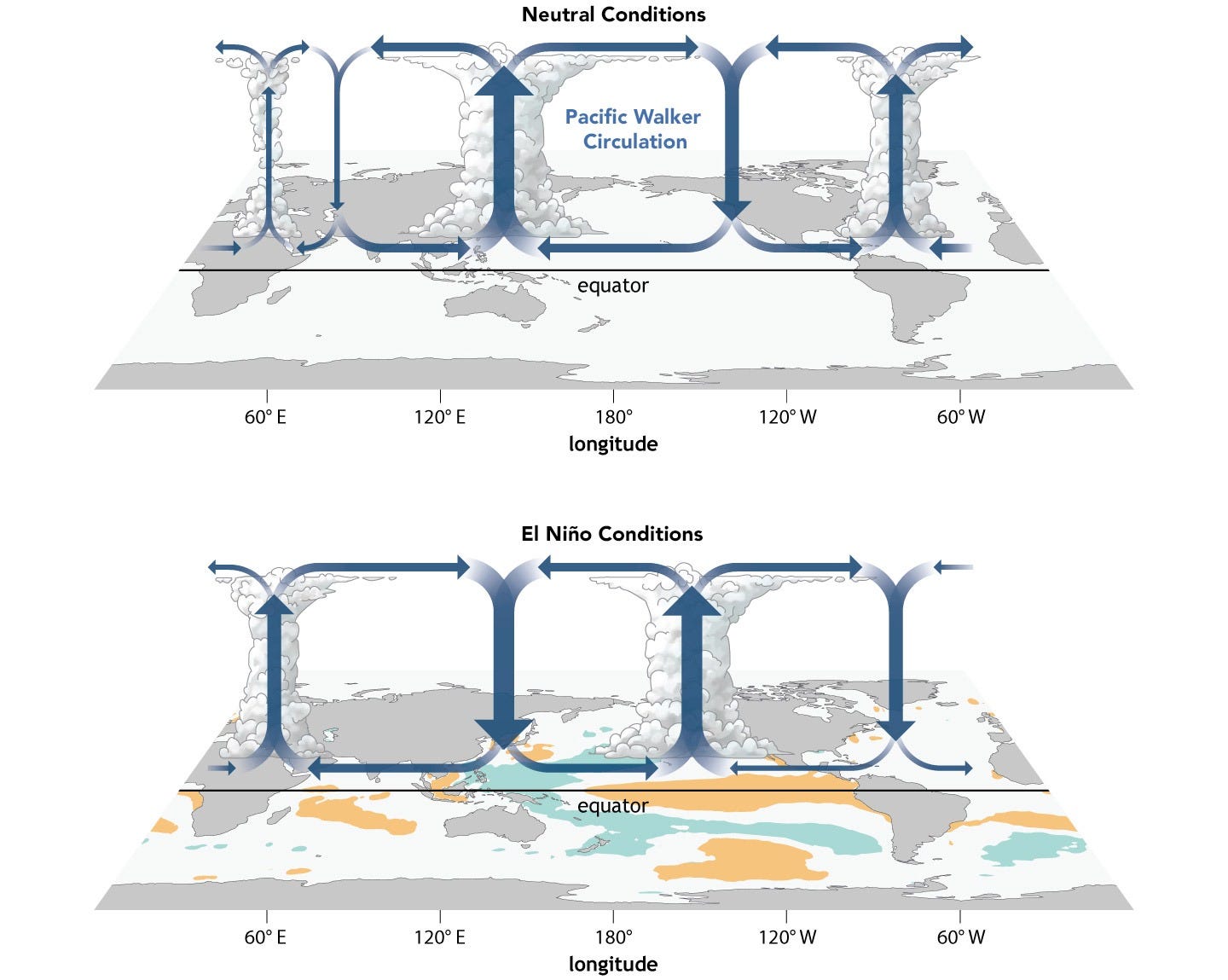
El Niño is the climate phase itself. “Super El Niño” is simply an informal term for an unusually strong El Niño, not an official scientific category. The concern this year is not just that El Niño is developing, but that it could strengthen beyond a typical event, increasing the risk of a weaker and more erratic monsoon.
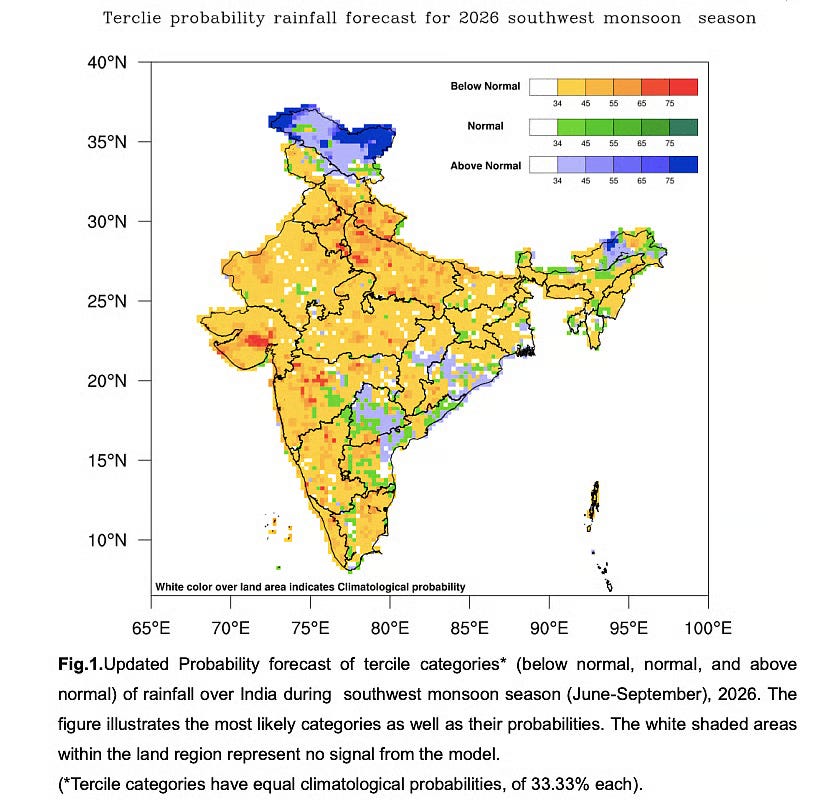
El Niño often weakens the atmospheric setup that supports the Indian monsoon. That does not always mean drought. It does not always mean disaster. But it does raise the odds of delayed rain, uneven rain, or rain arriving too late for crops that need moisture at a particular stage of growth.
That distinction matters more than people realize.
The danger in a year like 2026 is not just that rainfall may be lower. It is that the rainfall may be poorly distributed. A season can look “almost normal” on paper and still damage sowing, crop health, prices, and incomes if the rain arrives in the wrong pockets or the wrong weeks.
That is why economists and meteorologists keep repeating the same quiet warning: the average is not the story. The timing is.
Why 2026 feels uncomfortable
The 2026 monsoon is under scrutiny for three reasons.
First, the forecasts themselves have been weaker than usual, with estimates around 90% to 92% of the long-period average and El Niño expected to develop through the peak monsoon months.
Second, the RBI has already acknowledged the risk. In its June policy communication, it kept rates steady and retained a neutral stance while explicitly citing weather uncertainty, fuel inflation, supply-chain pressure, and the broader external shock from West Asia.
Third, the weather shock is not arriving alone.
That is what makes this year different.
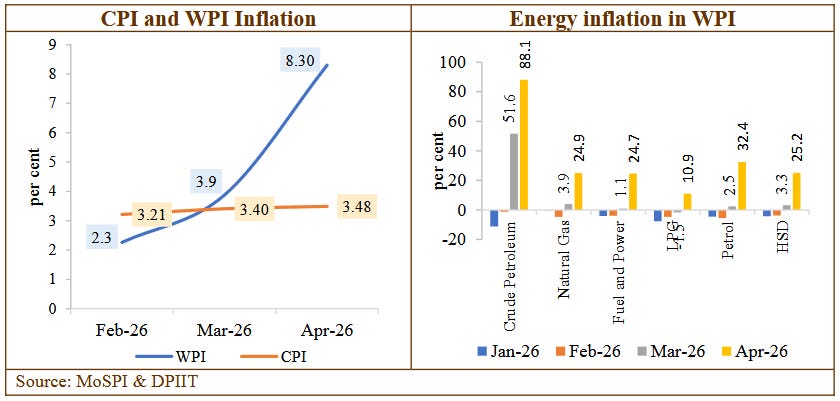
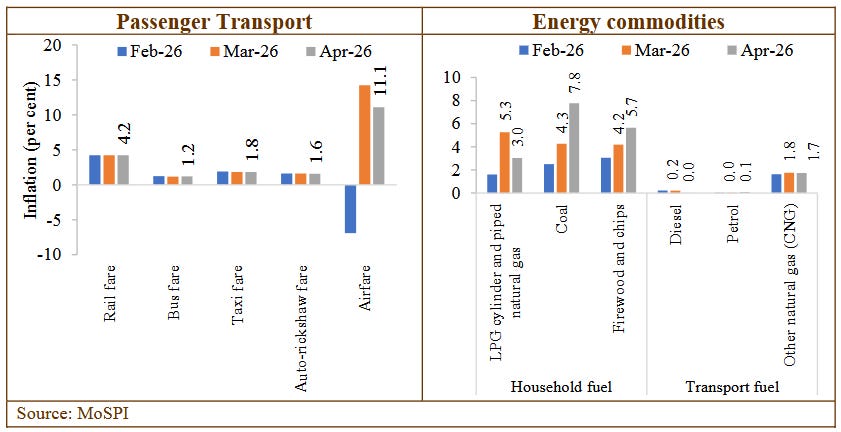
The pressure is coming from several directions at once: a weaker monsoon, extreme heat, elevated fuel prices, fertilizer supply disruptions, and a global commodity environment that can quickly transmit shocks into Indian households and farm economics. Viewed individually, each challenge is manageable. Together, they create a far more complex economic backdrop. This is no longer a single weather event. It is a convergence of risks, each amplifying the impact of the others.
That matters because stacked shocks rarely behave politely. They reinforce one another.
A weak monsoon pushes up food prices.
Higher fuel prices raise transport and logistics costs.
Fertilizer disruptions squeeze farmer margins.
Hotter weather boosts power demand.
And if all of this happens together, the result is not just agricultural stress. It is inflation pressure that reaches from the field to the kitchen to the RBI’s policy table.
The second-order effects are the real story
Most people hear “weak monsoon” and think of crops.
That is only the first layer.
The second layer is food inflation. India’s food basket is still large enough that a rise in vegetable, pulse, and edible oil prices quickly changes how households feel the economy. You do not need a full-blown shortage for that to happen. You only need a bad season in the right crops, at the wrong time.
The third layer is rural demand. That is where the monsoon becomes a corporate earnings story. Tractor sales, two-wheeler demand, entry-level consumer goods, even some rural housing demand can soften when farm incomes get squeezed. The market does not always punish the broad index, but the monsoon-sensitive sectors feel it.
The fourth layer is power. A hotter summer means more cooling demand. A weaker monsoon means less hydro generation. Coal steps in. Gas steps in. The energy mix shifts just when India would rather not have it do so.
The fifth layer is imports. El Niño does not stop at India’s borders. It can affect harvests, mining, hydro power, and commodity prices elsewhere too. That means palm oil, copper, nickel, fertilizer inputs, and other imported costs can rise for reasons that start in other continents but end up showing up in Indian prices.
That is the hidden cruelty of climate-linked economics. The damage is rarely contained to the first place it appears.
India is stronger than before. But that is not the same as safe.
It would be easy, and misleading, to write this as a story of vulnerability alone.
India is not the country it was in 1876, or even in 2009. Reservoirs are stronger. Irrigation coverage has expanded. Foodgrain stocks are better. Policy tools are more sophisticated. The economy itself is more diversified, and agriculture’s share in GDP is much lower than it once was.
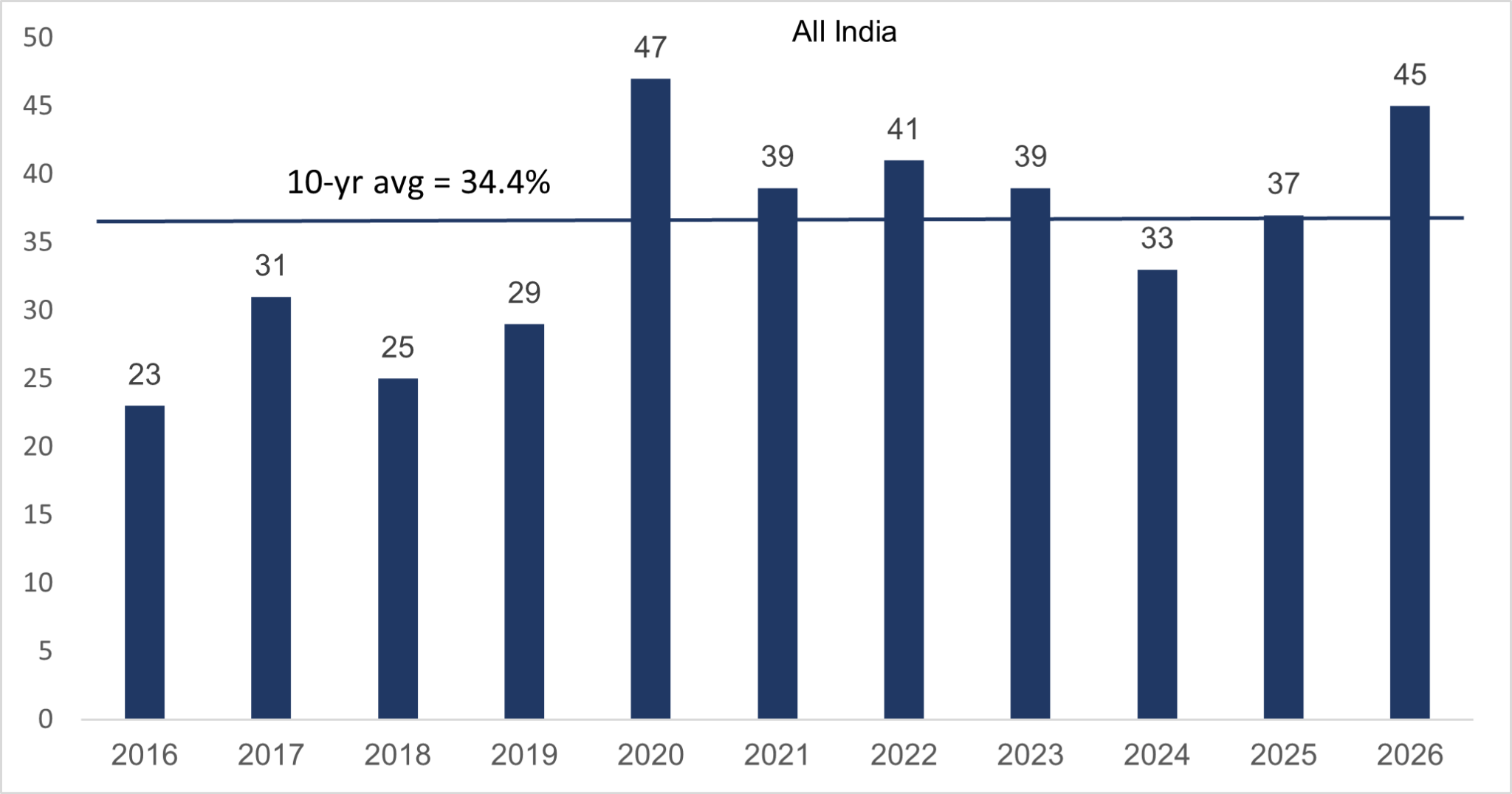
That means the same monsoon shock now causes different damage.
Not always less damage. Just different damage.
In the past, a weak monsoon could mean outright collapse in production and income. Today, it is more likely to show up as a price problem, a sectoral problem, a rural demand problem, and a monetary-policy problem. That is a quieter vulnerability, but it still matters.
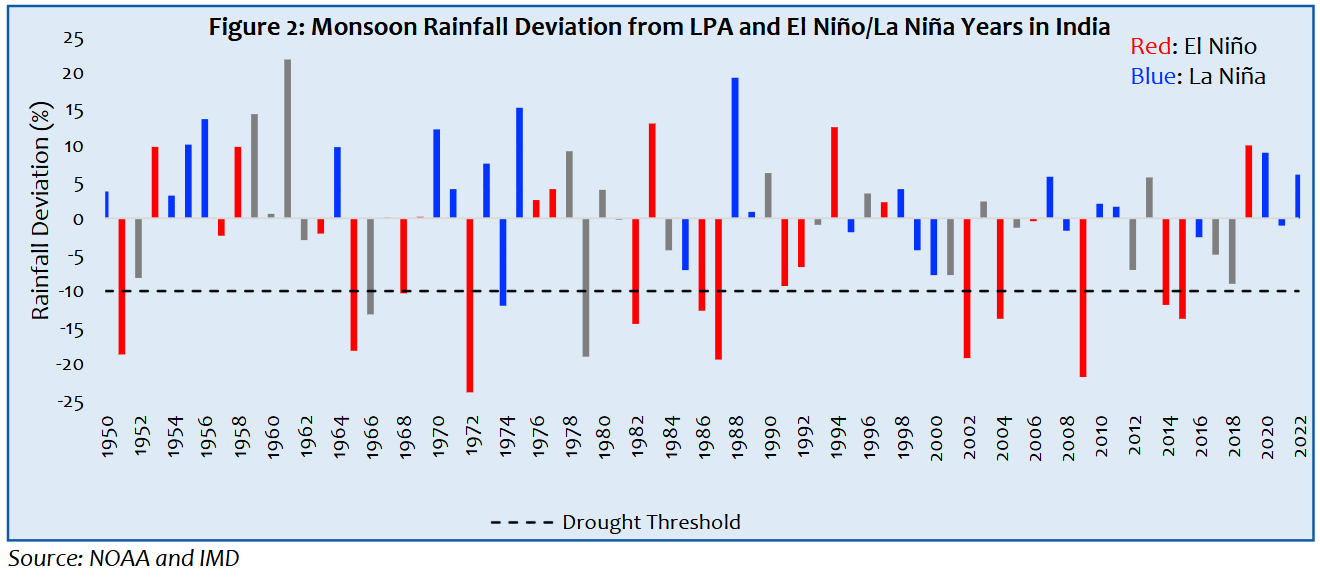
The good news is that recent history shows India can absorb more than it once could. The bad news is that absorption is not the same as immunity.
The monsoon is becoming a resilience test
That is the real frame for 2026.
Not “Will El Niño arrive?” It already has.
The better question is whether India has built enough resilience to prevent every weak monsoon from becoming a macro scare. And the answer is mixed.
The resources point toward the right direction: better irrigation, stronger stocks, crop diversification, reservoir buffers, more flexible policy, and a less agriculture-dependent economy. They also point toward what still needs work: hyperlocal forecasting, groundwater recharge, more climate-resilient farming, better risk mapping, and less reactive policymaking.
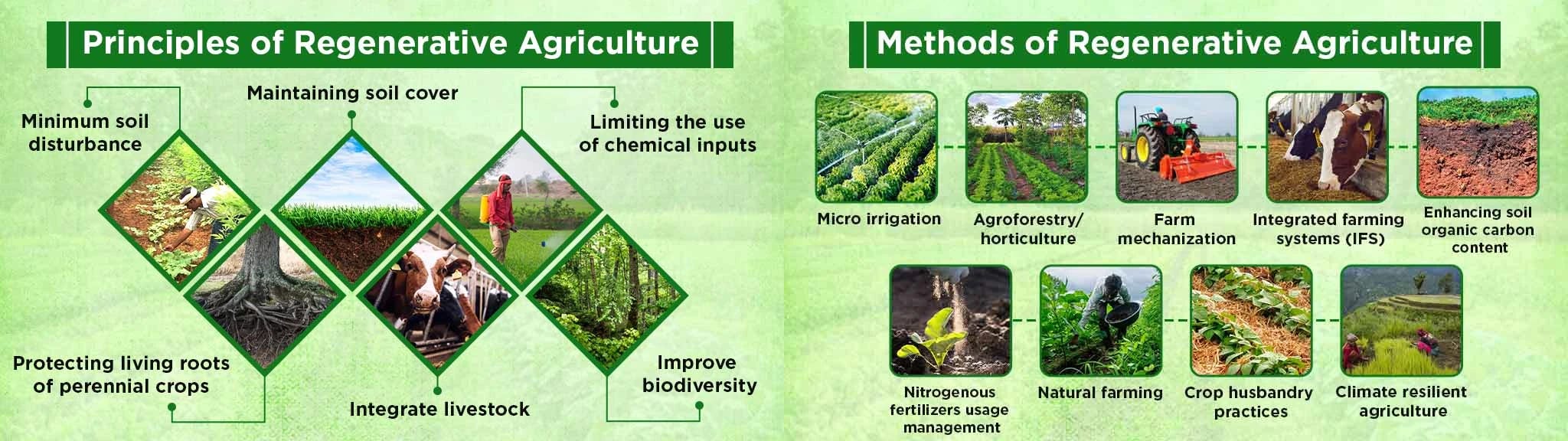
That is the lesson behind the science and the economics.
India does not need to pretend El Niño is harmless. It is not.
But it also does not need to treat every weak forecast as a national emergency. The country has more buffers now than it used to. The challenge is to keep building them faster than the climate throws new problems at the system.
The ending is not about rain
It is about dependence.
Because the unsettling truth is not that India still has a monsoon problem. It is that the monsoon still has so much say over India’s food prices, farm incomes, energy demand, and policy mood.
That is what makes 2026 worth watching.
Not because it is guaranteed to be a crisis. It may not be.
But because it is another reminder that India’s oldest economic risk has never really left. It has only become more sophisticated, more interconnected, and more expensive to ignore.
A warm Pacific can still unsettle an Indian kitchen.
And in 2026, that may be the most important economic sentence in the country.